Voyageurs National Park named 2026 Dark Sky Place of the Year
This month, northern Minnesota’s Voyageurs National Park was named the 2026 International Dark Sky Place of the Year by DarkSky International, an organization that works to protect dark sky environments and reduce light pollution.
The annual award recognizes locations and organizations that have contributed to preserving dark skies through educational or outreach efforts. Voyageurs National Park was selected for its work with regional organizations, such as the nonprofit Voyageurs Conservancy, to expand educational dark sky programming and encourage measures to reduce artificial light within the park, National Park Service officials said.
“Park employees and guests have long known that Voyageurs’ night skies are stunning, and we are pleased to see the hard work of our staff, local community members, and the Voyageurs Conservancy recognized,” said Voyageurs National Park Superintendent Jennifer Onufer. “Protecting dark skies doesn’t stop at the park boundary, and Voyageurs National Park looks forward to continued work with the community to preserve our remarkable night skies.”
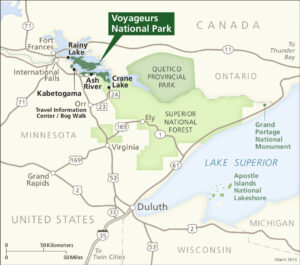
National Park Service map of Voyageurs National Park in northern Minnesota
The national park, which spans over 218,000 acres across northern Minnesota, received its International Dark Sky Park certification in 2020. Since then, the National Park Service and the Voyageurs Conservancy have collaborated to offer astronomy programs, host annual star parties, and educate students in a virtual dark sky classroom, among other initiatives.
“This milestone achievement recognizes Voyageurs Conservancy and Voyageurs National Park as global leaders in outstanding dark sky education and outreach,” Voyageurs Conservancy officials said in a social media post.
The two main educational and interactive events of the year are a Star Party in August and, in winter, a Boreal Stargazing Week that highlights why dark skies and natural darkness matter. Boreal Stargazing Week involves several regional organizations and public agencies, including the Voyageurs Conservancy, the Bell Museum, U.S. Forest Service officials with the Superior National Forest, Starry Skies North, and Friends of the Boundary Waters Canoe Area, among others. Events take place both in person and virtually at locations throughout Minnesota.
The park’s dark-sky work also involves communities beyond its boundaries, including International Falls, Kabetogama, Orr, Ash River and Crane Lake in Minnesota, as well as Fort Frances, Ontario, according to National Park Service officials.
Light pollution is caused by artificial light from sources such as outdoor fixtures, buildings, and urban settings. It can reduce visibility of the night sky, making it harder to see stars, constellations, and other celestial features.
Research shows that light pollution is increasing globally. A National Oceanic and Atmospheric Administration study found that satellite data showed continuously lit areas brightened at a rate of 2.2% per year between 2012 and 2016.
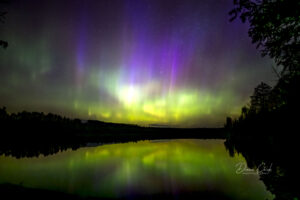
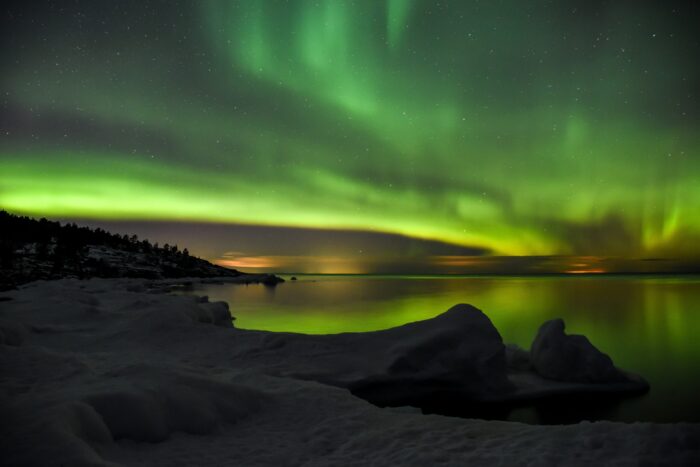
Northern Lights from West Bearskin Lake portage | Photo by Dennis Chick
Winter offers opportunities to view the night sky and northern lights across northern Minnesota. Several dark-sky events are planned throughout the region in the coming months, providing opportunities to learn about the importance of dark skies and efforts to protect them from light pollution.
In Cook County, the annual Dark Sky Festival is scheduled for Dec. 10-12, with interactive activities and educational programs planned for the public. A full schedule of events is available here.
Listen to a previous WTIP ‘Keep it Wild’ episode from the Boundary Waters Podcast about the Boundary Waters Canoe Area Wilderness as a Dark Sky Sanctuary. In December 2024, WTIP spoke with Ann Schwaller, a designated areas specialist for the U.S. Forest Service, about the history of the BWCAW as a certified Dark Sky Sanctuary. Audio below.
Kalli Hawkins November 17, 2026