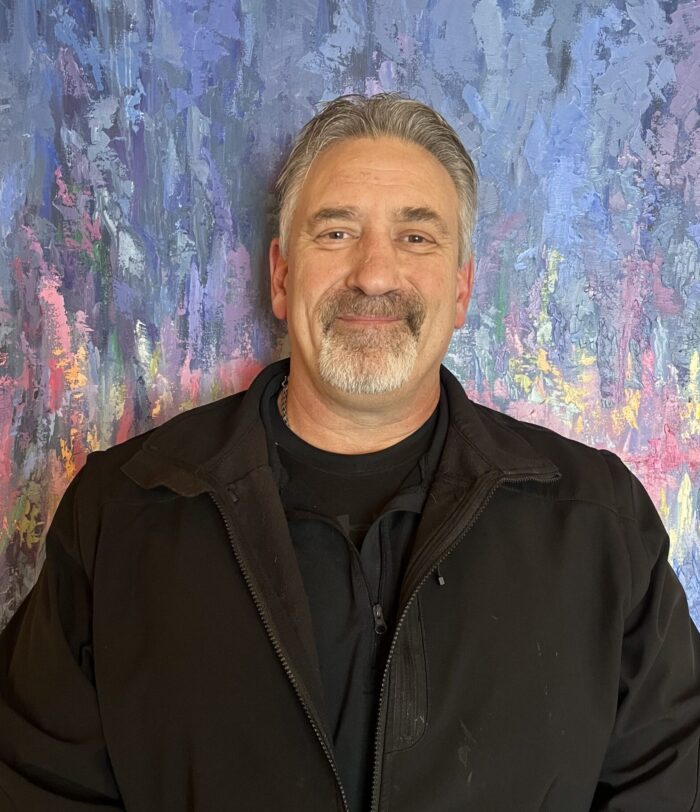
Cook County Sheriff will not seek re-election in 2026
After 31 years in law enforcement, Cook County Sheriff Pat Eliasen announced on Jan. 13 that he will not seek re-election later this year. Eliasen has served as sheriff for the past 11 years and will finish his term at the end of 2026, and said he intends to retire from public service at that time.
Reflecting on three decades in law enforcement
Eliasen told WTIP that his decision to retire was based on wanting to spend more time with his family and pursuing his own interests. While he will not be working in active law enforcement, he said he will remain connected to the law enforcement field through his work as an instructor in criminal justice programs at both Concordia University St. Paul and Colorado Technical University.
Over the course of his three-decade career, Eliasen said one of the biggest changes he has seen in policing is the use of technology. He said that when he began his career in 1995, everyone, from dispatchers through deputies, kept paper logs. He said the adoption of more digital technology has streamlined many processes, and improved the ability for law enforcement agencies to communicate with each other. At the same time, Eliasen expressed his concern that too much reliance on technology means that when the system fails, it leaves law enforcement agencies “dead in the water.”
Beyond the increase use of technology, Eliasen said that in his experience, not very much about policing has changed. “At the core, it’s never changed,” he said, “We treat everybody with respect, with dignity, and we make sure that we provide the highest level of public safety we can. So, you know, and in that aspect, I think it’s, it’s remained a bit of a constant.”
Eliasen commented that during his career there was a shift nation-wide toward community policing, an approach that aims to foster more connection and cooperation between law enforcement officers and the communities they serve. In a small community like the one in Cook County, however, Eliasen said those connections were already strong. He said it was something he was proud of when looking back on his time with the department.
Another effort that Eliasen said he was proud of was the collaboration between the county and the Grand Portage Band of Lake Superior Chippewa to help establish the first indigenous-led coast guard in the country. The Cook County Sheriff’s department partnered with the band to lobby for funding for the four boats that will comprise the marine unit. Two of the boats will remain in Grand Portage, and Lake and Cook counties will each be gifted a boat, with the aim at helping fill the safety gap left behind when the US Coast Guard station in Grand Marais was decommissioned.
Though he has already announced his intention to retire, Eliasen said he will finish out his term, which runs through the end of 2026. During the final year of his time as sheriff, Eliasen said his top goals are to see the Law Enforcement Center expansion completed, see the body camera program rolled out, and see the Cook County boat in the aforementioned marine unit make it into the water.
Law Enforcement Center expansion update
The expansion of the LEC is already well underway and is slated for completion in the spring. The project has been several years in the making, and the county officially broke ground on it in the fall. The addition and renovations will provide more space for deputies and other department employees, improve evidence processing and storage areas, and include important security upgrades.
Eliasen said that the project is moving along, but that there have been some disruptions to the department. The sheriff’s technicians, who handle things like permitting for fireworks, liquor sales, and carrying a firearm, have temporarily moved to the Cook County Courthouse. This has allowed for easier access for members of the public looking for permits, because, Eliasen explained, the ongoing construction has impacted the usual public access.
Eliasen added that as the project enters the next phase, some department employees will work from home, and more offices may have to be temporarily moved during work on the interior of the building. Eliasen said that the public will still be able to access the LEC, but he added, “We have plans for each phase of this, but we just have to kind of play it by ear a little bit during construction.”
Body camera program
This year will include the launch of a body-worn camera program for the Cook County Sheriff’s Department. Through most of 2025, the county worked on a policy for both the use of the cameras and storage of footage, including establishing guidance on what kind of footage could be requested by the public.
Eliasen said that program should be up and running in February, adding that at this point they are waiting on some additional training for deputies, and finalizing the software system for storage and redaction, in an effort to streamline the process in the event that there are public requests for footage.
Under the policy, members of the public will be free to request any footage collected by the department. However, state statute limits some of the footage that can be released. Footage that includes images of minors, sensitive personal information, footage that was captured in non-public spaces like a private home or in a school, or which is related to an ongoing investigation, could all be subject to redaction.
Staffing
Over the past several years the Cook County Sheriff’s Department has consistently had job vacancies, which, according to Eliasen, is not unique to the area. He said that many departments across the nation, and especially here in northern Minnesota, have struggled to maintain full staffing.
At this time, the department has three openings for deputies, and one for a dispatcher, but Eliasen said that they are currently conducting background checks for two candidates for the deputy positions, and for a potential dispatcher.
While in past years housing has been one of the hurdles for hiring in the area, with more apartments available for rent in the area, Eliasen said the challenge has shifted. “Housing now is a million times better than what it was two years ago, but finding quality applicants for law enforcement now public safety, is terribly difficult,” he said, and explained that the combination of the relatively few educational programs for law enforcement in the area and the ability for larger agencies to recruit more aggressively, has made it harder for smaller organizations to recruit strong candidates.
WTIP’s Kirsten Wisniewski spoke with Sheriff Pat Eliasen about his decision to retire and about department updates. Audio of that interview can be found below. Eliasen also addressed the department’s relationship to federal law enforcement agencies, including recommending how Cook County residents should approach potential interactions with Immigration and Customs Enforcement agents. Audio of that part of the conversation, as well as more information on recommendations from other local and state leaders, can be found here.
Kirsten Wisniewski January 15, 2026