Minnesota’s moose population sees slight increase, remains relatively stable
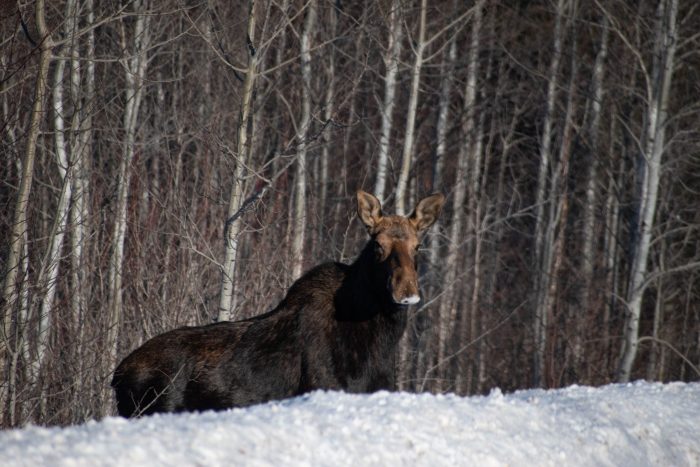
Minnesota’s moose population is relatively stable, with an estimate of approximately 4,470 animals, according to the Minnesota Department of Natural Resources 2026 population survey.
The recent population estimate is 11% higher than last year’s. The 2025 survey estimated the moose population at 4,040 animals.
Moose populations have fluctuated in recent years. Survey findings suggest that after a steep decline from a population estimate of 8,000 in 2009, Minnesota’s moose population appears to have somewhat stabilized, fluctuating around 3,700 animals in recent years.
Researchers involved in the annual study say that “stabilized” doesn’t mean the population is constant. Instead, annual population changes appear relatively small and random, with some years showing an increase and others a decrease.
The annual aerial survey encompasses nearly 3.8 million acres and includes the Boundary Waters Canoe Area Wilderness. Researchers conduct the surveys to estimate moose abundance, percentage of calves, and calf:cow and bull:cow ratios.
The report shows that there was a slight increase in the calf:cow ratio, the percentage of calves, and the percentage of cows with twins compared with the previous year’s survey.
However, researchers caution that “current population trends do not predict future population trends because underlying demographic factors affecting population abundance can change over time.”
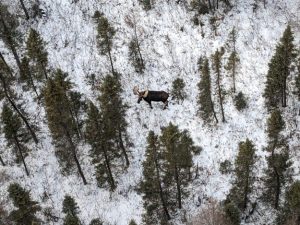
Bull moose seen from aircraft in northern Minnesota | Contributed Minnesota DNR
The annual Minnesota moose survey is a collaborative tribal-state partnership. The Fond du Lac Band of Lake Superior Chippewa and the 1854 Treaty Authority contributed personnel and funding for the 2026 annual survey.
Despite recent estimates suggesting relative stability in the population and reproductive success, tribal and state researchers point out that Minnesota moose remain at risk.
Several factors impacting moose populations include habitat loss, predator impacts on calf survival, parasites such as the transmission of brainworm from deer to moose, and winter ticks.
To better understand and address moose reproduction and survival, several ongoing research projects in northeastern Minnesota are focused on studying these factors.
This winter, a collaborative tribal-state research project launched to study survival rates and reproduction of juvenile moose. The project, under the umbrella of the Northern Moose Alliance, involves the Minnesota DNR, 1854 Treaty Authority, Grand Portage Band of Lake Superior Chippewa, and the National Parks Lake Superior Foundation.
“I think one of the things that we recognize is the population has stabilized over the past decade or so, and while that’s a good thing that it’s not declining further, it’s not also growing,” Michelle Carstensen, the DNR wildlife health program supervisor involved in the project, told WTIP.
However, in order for that to occur, several things would need to happen.
Seth Moore, the director of natural resources for the Grand Portage Band, said deer densities would need to remain low to reduce brainworm transmission, and predator levels would need to remain low to allow higher moose calf and juvenile survival.
“If those can be maintained for a couple of years, I think we could see a bolus of moose increasing in northeastern Minnesota,” Moore said.
The collaborative tribal-state moose initiative is a multi-year project that will take place from 2025 to 2031. Funding for the project was provided by the Minnesota Environment and Natural Resources Trust Fund (ENRTF) as recommended by the Legislative-Citizen Commission on Minnesota Resources (LCCMR).
Kalli Hawkins March 24, 2026