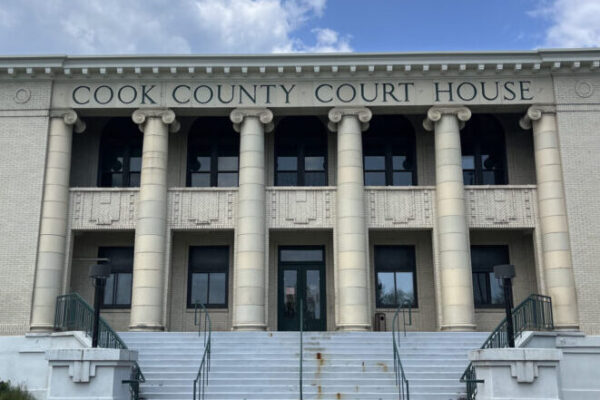
Tax-forfeit properties could play a role in affordable housing development in Cook County
Housing costs are high across the state, and especially in Cook County. And with a housing shortage to grapple with, many in the county are wondering how to not only build more houses, but also how to make sure they are affordable. One factor that contributes to the cost of building homes is the cost of land. One idea for keeping land costs lower is to harness a county resource: tax forfeiture properties
Not paying property taxes can mean fines for late payments, but property owners who miss a full year of payments are considered delinquent, and if enough time goes by with a delinquent balance, a county can take possession of a property, considering it tax-foreited.
The 2024 Supreme Court case Tyler vs. Hennepin County changed the way that counties in Minnesota are required to address the tax forfeited properties on their rolls. Much of the Tyler decision had to do with how counties can use proceeds from the sale of those properties, but it also impacted the timelines counties had for selling properties.
Recently the Cook County board voted to list a handful of tax forfeited properties for sale. Along with those properties was one that the county acquired through a land swap.
The board opted to convey that land, a vacant parcel in Tofte, to the Housing Redevelopment Authoritiy for use specifically for affordable housing. Moves like that raise the question of how the county could use it’s land, not just those from land swaps, to support affordable housing in the area. Assessor Bob Thompson told WTIP about how the county typically approaches tax-forfeited properties.
Thompson previously told WTIP that for parcels on tribal land, the county conveys ownership of those properties to the Grand Portage Band. He added that for lots that the county isn’t required to offer for sale, they evaluate potential uses by the county. This could include things like using the site for county buildings, like the Highway Department building, or to create a gravel pit, if the property is a good candidate for one. More recently, however, the county has identified evaluating properties for potential affordable housing development as a priority.
Thompson explained what the county is looking for when it comes to properties that could be used for housing. “We’ll go through them and look at, you know, parcel size, zoning, location, you know, is it in proximity, traveling distance to some of these jobs and stuff in the county? So those are the primary factors we’ll be looking at,” he said.
HRA Executive Director Jeff Brand also talked to WTIP about how access to county properties for development impacts the types of projects the organization can support.
“At the end of the day, I think we need housing. There’s only so much land that’s available, and whether it’s acquiring tax forfeit land, or perhaps even buying out some land and redeveloping that existing structure, or whatever the case is, that’s part of what we’re doing here at the HRA,” Brand said.
He added that using these properties for housing projects is a way to return them to the county tax rolls, in addition to providing more housing options in the area.
As the county and HRA look toward the future however, the option of the county conveying land to the HRA may be limited. Thompson explained that not only are tax forfeitures relatively rare in Cook County, but many of the parcels the county takes possession of are not suitable for a housing development.
An audio version of this story is available below.
Kirsten Wisniewski April 29, 2026