Administrator talks county updates and 2026 goals
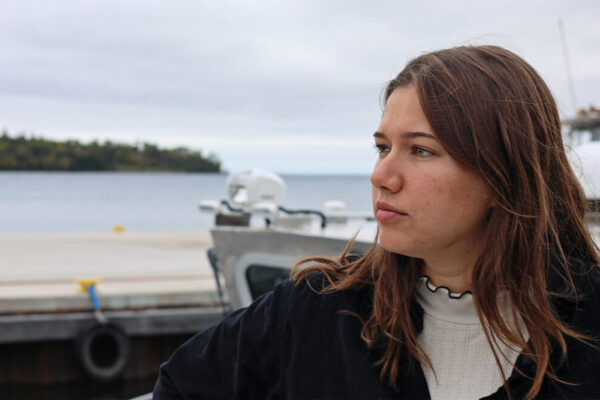
The Cook County Board of Commissioners held their first regular business meeting of 2026 on Jan. 13. Administrator Kristen Trebil-Halbersma told WTIP about some of the items that the board kicked off the year with, including updating the Capital Improvement Plan (CIP), understanding how the county approaches hiring, and setting legislative priorities.
Updating the CIP
2025 included several construction projects for the county. As part of the CIP, the county undertook a project to renovate and create more office space in the courthouse basement, and to move forward with an expansion for the Law Enforcement Center. Part of the CIP, first passed in 2022, was identifying the space and security needs for county buildings, in addition to what updates and deferred maintenance might be required.
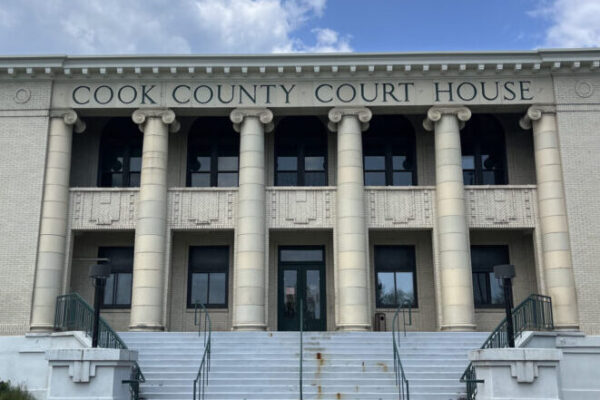
While the basement office renovation addressed some of the space needs identified in the CIP, the initial evaluation done of the Cook County Courthouse included court security improvements. For some time the board considered a potential justice center plan, which would have comprised of the LEC expansion in addition to building a wing that would house the courts on the same property, but ultimately decided against it. This has left the security concerns at the courthouse unmet.
As they move into 2026, the board has opted to contract with BKV group, the architects currently working on the LEC, to update the CIP, evaluating what needs have yet to be met, focused on the Cook County Courthouse. Trebil-Halbersma said, “Part of this improvement plan would be to make sure that we’re up to the best practices and standards to ensure safety for anyone entering the court facility, for our judges and court staff, and other staff within the building.”
Approach to hiring
The first business meeting of the year included a conversation about how the county approaches hiring. Trebil-Halbersma explained that there are a variety of factors that are considered for which vacancies might be posted internally, and which might be advertised more broadly. She said that there are benefits to hiring from within the existing staff, including maintaining continuity and ease of training. She added that it is important to allowing staff space for advancement. At the same time, she said the county is committed to recruiting the best candidates. Trebil-Halbersma said it is important for the board to understand how that balance is considered.
“I want to make sure that it’s clear that we are doing that analysis up front, to make sure that we’re we’re really considering both approaches as we move forward with every position,” Trebil-Halbersma said. “The discussion with the commissioners at the board meeting was about just the analysis- that it was, that is happening, and what’s going into making those decisions, about what approach we use.”
Legislative priorities
Each year the board identifies a slate of legislative priorities, items that they will specifically advocate for during the state legislative session. The Association of Minnesota Counties (AMC) creates a list each year that aims to reflect common needs for county governments across the state. While the AMC priorities cover a range of items important to the Cook County community, local organizations, like Visit Cook County, the City of Grand Marais, and the Board of Commissioners have identified several additional priorities unique to the area.
At the Jan. 13 meeting Trebil-Halbersma outlined the items identified by AMC as priorities for both state and federal lobbying. Many of those items centered on human services related programs, including maintaining support for the Supplemental Nutrition Assistance Program (SNAP), Medicare and Medicaid protection, and expanding access for those seeking mental health care and in-home services.
Locally, both the City of Grand Marais and Visit Cook County have identified securing funding for a new wastewater treatment center in Grand Marais as the top priority.
After discussing what is already being advocated for, the Board of Commissioners opted to identify a highway department project that would improve the end of the Gunflint Trail as an additional priority to lobby on behalf of.
At the Jan. 13 meeting, Commissioner Garry Gamble expressed that he would like the county to conduct additional public outreach around legislative priorities. Trebil-Halbersma told the commissioners that at this point, while it is too late to collect feedback about selecting the priorities, the board could have further discussion about how to share information about those items with the public.
Looking ahead to 2026
Beyond the legislative priorities, Trebil-Halbersma said she has her own set of items to focus on for the county as she looks at 2026. This will be her first full year in the role. She said her first six months on the job have been busy.
The second half of 2025 was marked by news of mismanagement in PHHS, formal investigations into several former employees, and a high rate of turnover and job vacancies in that department. While the investigations were concluded shortly after Trebil-Halbersma took the administrator job, she was tasked with coordinating the county’s response, identifying what changes were required in the department, and, at the same time, maintaining client services. Those efforts are ongoing.
2025 also came with a high level of uncertainty for local governments across the nation as major changes were made to federal funding programs. On the county level, this has informed the board of commissioners’ discussions about planning for the future.
As she considers the next year, Trebil-Halbersma said she has worked with department heads and the board of commissioners to identify focus areas.
At the end of 2025 the board discussed changing the county’s approach to budgeting in the future, and Trebil-Halbersma said that working out what changes are needed and how to adjust the current system will happen early in 2026. Last year, she joined the budget discussions as they were already in progress. The initial conversations about budget priorities took place before she was hired.
Also on Trebil-Halbersma’s agenda is revisiting county HR policies that have not been updated recently, and evaluating the strategic plan that was written two years ago, to identify goals that have not yet been completed.
Trebil-Halbersma said that she has learned a lot during her first six months as administrator. “My background was working with the judicial branch, so coming into county government has been different for me, and I’ve learned an incredible amount from the commissioners, from our staff within the county, and from community members,” she said.
WTIP’s Kirsten Wisniewski spoke with Administrator Kristen Trebil-Halbersma. Audio of that interview is below.
Kirsten Wisniewski January 16, 2026