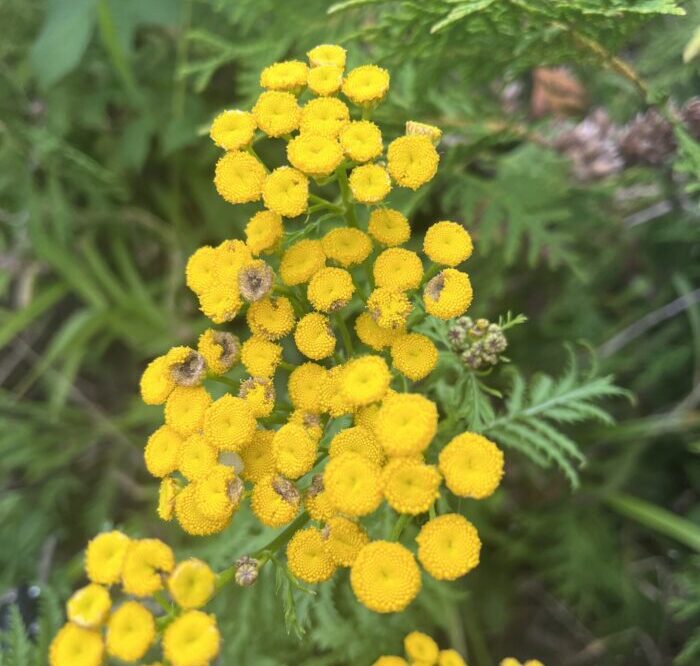
Ag Inspector and Local Weed Inspectors help control noxious weed populations
Each year the Minnesota Department of Agriculture and county Agriculture Inspectors across the state issue a Noxious Weeds Notice. The purpose of the notice is to communicate to the public what plants in the state or in their county are considered harmful.
Cook County Agriculture Inspector Tia Parks had good news for residents. She told WTIP that while the county opted to add two species to the list alongside the state identified species in 2024, but this year’s notice, issued May 9, does not include any further additions.
All of the plants on the noxious weeds list have been assessed by the Commissioner of Agriculture and deemed harmful in some capacity. That could be harmful to human health, environmental health, livestock health, or they could cause economic harm. For economic harms, Parks said that for some of the species, not controlling them at small population size can mean damage and expensive mitigation efforts.
The plants identified as noxious are further classified into five categories that dictate what control measures are required.
- Prohibited Eradicate – all efforts to control the population must be with the intention of complete eradication
- Prohibited Control – control of the population is focused on preventing the spread of a species
- Restricted – are not allowed to be sold within or imported to the state
- Specially Regulated – can be sold, but with specific guidelines on how to prevent population spread (ex: planting in a pot, mowing around a plant, or preventing seed production or spread)
- County Noxious Weeds – treated as Prohibited Control, but added to the list by request from a county to specifically address the potential spread of a species in that county
The state noxious weeds list is lengthy, though not all of them are present in Cook County. “We like to think that we are one of the most remote, untouched areas when it comes to noxious weeds, and that is pretty true,” Parks said. “We are still ahead of the curve on a lot of species that the rest of the state has had for hundreds of years at this point.”
Part of staying ahead of the curve is vigilance from the Cook County Invasives Team, which Parks leads, and property owners who report weed populations. Additionally, Parks explained that the noxious weeds law and state ordinance identify any town board supervisors or the mayors of any cities as a Local Weed Inspector. These individuals play a reporting role, notifying Parks of any noxious weed populations that they observe or of which they have been made aware. She said that Local Weed Inspectors should familiarize themselves with the noxious weed law and the noxious weed list to know which species must be controlled.
Whether it is a Local Weed Inspector or a property owner, Parks said that if there are questions about specific species or how best to control them, people should reach out to her. She said that for many of the species that are not tansy or Canada Thistle, which are plentiful in the county, and especially in Grand Marais, her team will often coordinate with property owners to take over the management of the weed population.
For noxious weeds or any invasive species in the county, Parks said an important thing for property owner to remember is that transporting the plants can cause further problems. Cook County does not currently have a designated place for people to drop off plant debris from noxious weeds, so she said the best policy for most of the weeds is to allow the plants to dry, and then to burn them.
For questions on noxious weed management and disposal, or to report the presence of a noxious weed, Parks can be reached by email at tia.parks@cookcountymn.gov, or by phone at 218.387.3692.
WTIP’s Kirsten Wisniewski spoke with Cook County Agriculture Inspector Tia Parks. Audio of that interview is below.
Kirsten Wisniewski May 11, 2026