Grand Portage Band leadership on mining ban reversal: “the fight isn’t over”
After a 49-50 vote in the U.S. Senate that reversed a ban on mining near the Boundary Waters Canoe Area Wilderness, Grand Portage Band of Lake Superior Chippewa Chairman Robert Deschampe released a statement through a press release from the band denouncing the resolution and committing to continue fighting on behalf of environmental protection.
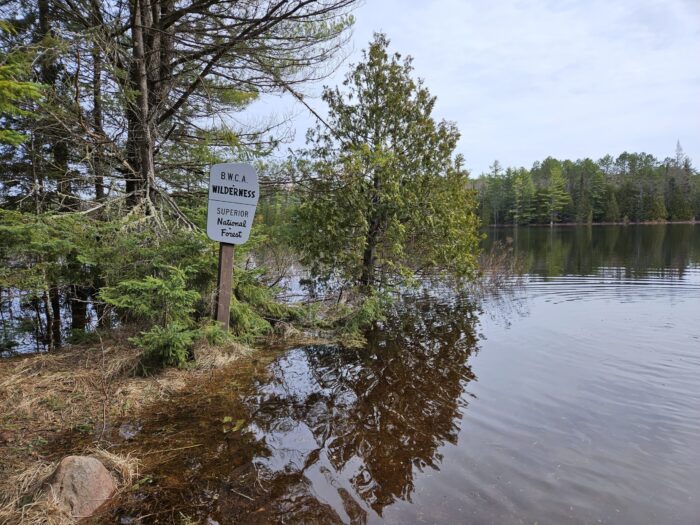
House Joint Resolution 140, proposed by Minnesota 8th District Representative Pete Stauber would reverse a 20-year mining withdrawal in the Superior National Forest and the Rainy River Watershed. While mining is not allowed within the Boundary Waters Canoe Area Wilderness (BWCAW), Stauber’s resolution allows for mining near the boundary waters, which, according to opponents, puts the entire Rainy River Watershed, including the BWCAW at risk of contamination.
Stauber’s measure relied on the Congressional Review Act (CRA), which allows congress to overturn some federal agency actions. This is the first time it has been used to reverse a public land order.
The narrow approval of the resolution has drawn strong responses. Deschampe said in the press release, “This decision threatens our people, our treaty right, and one of earth’s last pristine ecosystems.”
Deschampe also criticized the federal government for leaving tribal governments out of the conversation. A request from the National Congress of American Indians for the Senate Committee on Indian Affairs to hold a hearing with tribal leaders on the topic was denied, according to the press release.
“Congress has gambles with our water, our resources, and our future – without ever sitting down with us,” Deschampe said in the press release. “That’s not what the federal trust responsibility is and it’s not consultation. That’s a failure of the United States’ most basic obligations to tribal nations.
According to the press release, Deschampe penned a letter in February to Minnesota’s Senators, Tina Smith and Amy Klobuchar about the reversal and the proposed sulfide-ore copper mine proposed by Twin Metals that the reversal would allow. His letter called attention to the potential contamination of local waterways and public health impacts. It also highlighted the risk the proposed mine poses to treaty-protected resources, including hunting, fishing, and gathering rights.
During her statements on the Senate floor on April 15, as she aimed to delay a vote on the measure, Smith also cited the lack of tribal inclusion in the Senate’s consideration. “These are tribal nations, Indigenous people that have lived in northern Minnesota, on the borderlands of northern Minnesota, for time immemorial, and they have treaties with the federal government,” Smith said. “And yet this CRA before us today completely abrogates those tribal treaty rights. It ignores the responsibility of the federal government to consult with tribes, which has not been done, and that is why so many of the tribes across the country have come together to oppose this.”
Within the press release, Deschampe states that Grand Portage is supportive of safe mining, but clarifies that this does not include sulfide-ore copper mining, which he said has caused water pollution and permanent damage in other places.
Since the measure passed on Thursday, environmental groups and political leaders have stated their commitment to challenging its legality. The proposed mine would also still need to meet state environmental standards.
Gov. Tim Walz’s office has yet to make a public comment on the reversal of the ban, but some state legislators have expressed their hope that the matter will be discussed before the end of the legislative session in mid-May.
“The fight isn’t over,” Deschampe said to end the press release. “We will keep working with our partners and make sure our voices – and those of future generations – are heard.”
Kirsten Wisniewski April 17, 2026