Sled dogs assist Forest Service to complete Eagle Mountain rehabilitation project in BWCAW
Over the past several weeks, a team of sled dogs has played a key role in assisting the U.S. Forest Service with a rehabilitation project at Eagle Mountain in the Superior National Forest.
The project includes replacing the deteriorating boardwalk along the 3.5-mile Eagle Mountain trail, located approximately 30 minutes northwest of Grand Marais. The trail traverses the remote rocky terrain within the Superior National Forest, leading to Minnesota’s highest point at 2,301 feet.
A section of the trail lies within the Boundary Waters Canoe Area Wilderness, where the 1964 Wilderness Act prohibits motorized or mechanized equipment.
Rather than haul the material in by hand, Forest Service crews brought in Tom Roach and his team of sled dogs to help haul hundreds of pounds of materials and lumber. The effort unfolded over three days, with multiple trips made along the Eagle Mountain trail.
“Sled dogs are a very traditional way of travel here in this part of the country, and to think that we get to use them in this kind of utilitarian sense, I think it’s really neat,” said Cathy Quinn, the U.S. Forest Service assistant wilderness program manager.
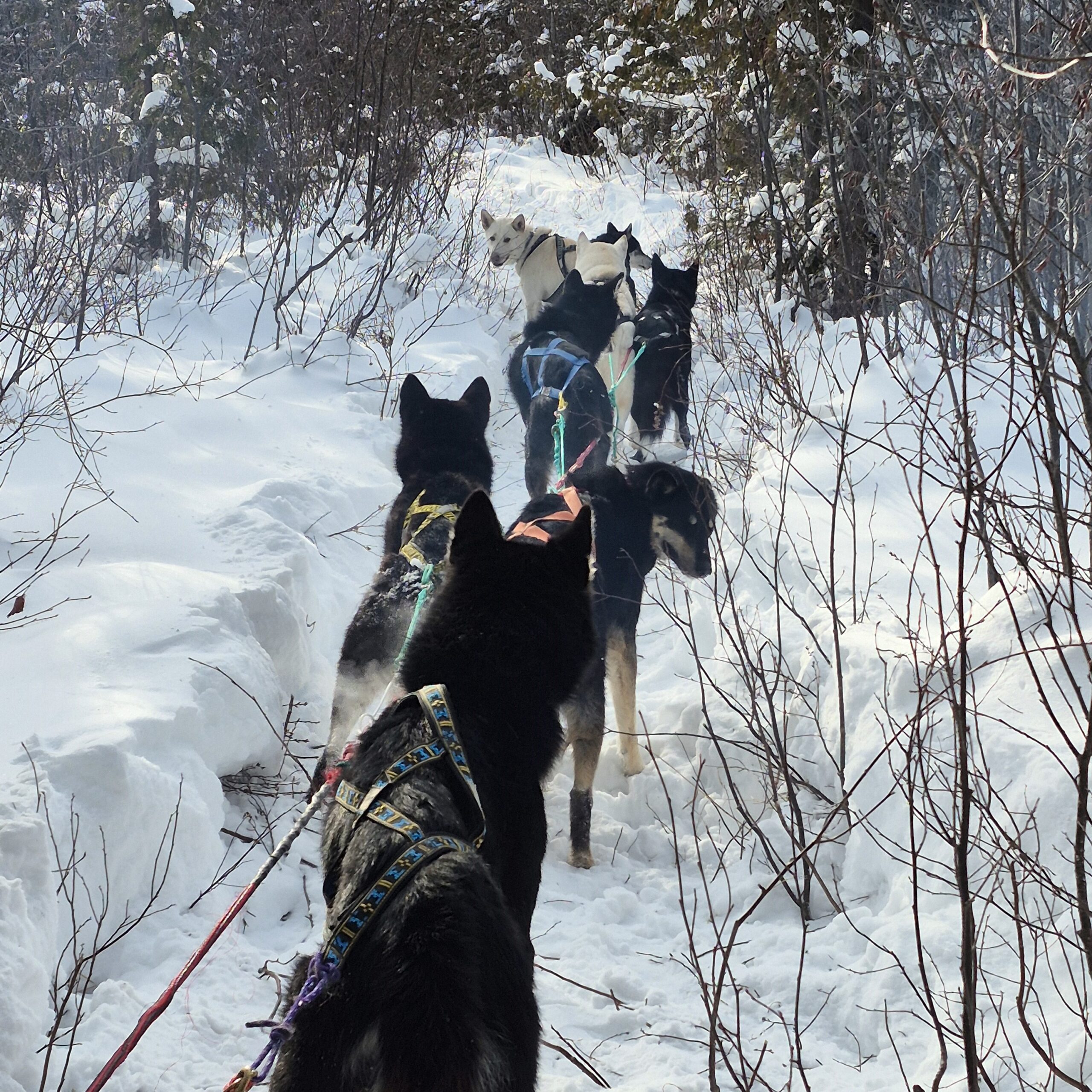
Sled dogs are ready to pull materials at Eagle Mountain Trail-Superior National Forest | USDA Forest Service
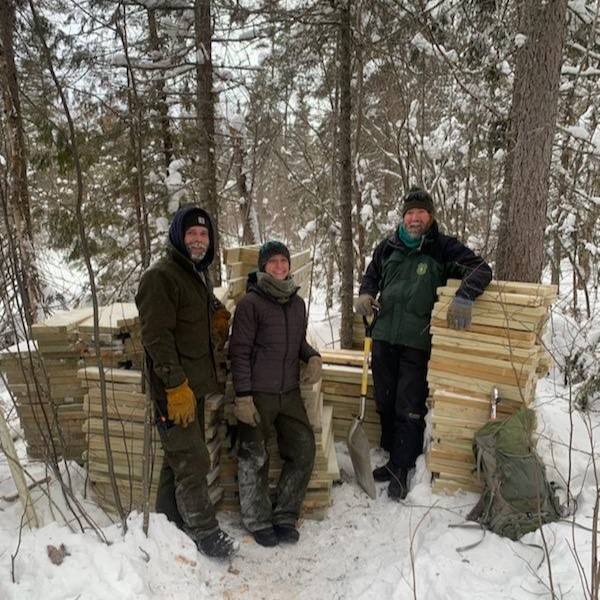
Forest Service staff stand by stacks of wooden planks hauled in the winter with dog sleds for a future summer project at Eagle Mountain Trail on the Superior National Forest | USDA Forest Service
Roach, who also works for the Forest Service, is a musher and frequently lends his team of nearly 30 sled dogs to the Forest Service to haul materials and people into the remote areas of the BWCAW for various projects. Throughout the years, Roach and his dogs have assisted with other BWCAW projects as part of the Forest Service winter mushing program. Years ago, the Forest Service used sled dogs to haul material into the BWCAW to rebuild the Stairway Portage between Duncan Lake and Rose Lake.
“We’re super fortunate here on the Superior to have an employee who’s a dog musher,” Quinn said. “He basically lets us use his dogs to freight materials into the wilderness.”
Quinn said the winter mushing program offers a unique way to tackle projects like the Eagle Mountain rehabilitation effort. “I’m not sure that there’s anywhere else in the National Forest system that has this arrangement like we do.”
Once the snow melts later this spring, Forest Service crews will begin replacing the boardwalk. Quinn said she expects Roach and his team of sled dogs to return next winter to help haul out the deteriorated lumber.
WTIP’s Kalli Hawkins spoke with Forest Service Assistant Wilderness Program Manager Cathy Quinn about the scope of the rehabilitation project, the process of using sled dogs to haul material, and more. The audio is below.
Kalli Hawkins January 30, 2026