The birds are back in town: how to support spring migrants
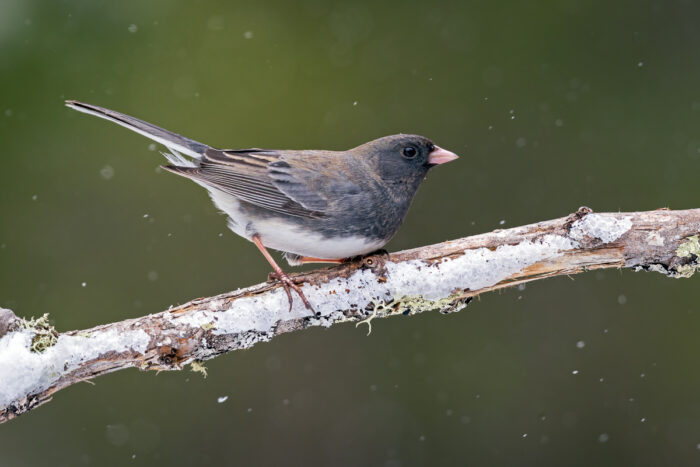
The past several weeks have included an influx of birds on the North Shore as they migrate up from their warmer southern homes. Thousands of Dark-eyed Juncos and sparrows have arrived, along with Ruby-crowned Kinglets and Brown Creepers.
Gaea Crozier is a non-game wildlife specialist with the Minnesota Department of Natural Resources (MN DNR). She told WTIP that early spring is a great time to observe birds before trees have leafed out. But she also said that completing the migration and settling in for breeding is a particularly vulnerable time for birds.
The greatest risk for migrating birds, according to Crozier, are windows. She said birds are often not able to discern the difference between a reflection of trees or sky in a window, and the real thing, so they can become seriously injured flying into windows they mistake for open air. Crozier recommended things like window clings or DIY solutions like using tempera paint or strips of paper to create patterns on windows. The patterns or clings help discourage birds from flying toward window reflections.
Crozier explained that the primary focus of most birds as they return north is to refuel after their long voyages. She said that planting native plants and shrubs is a good way for people to support returning birds, giving them both a place to shelter and seeds and berried to eat. For those who keep bird feeders, she said it is paramount that they are kept clean. The area underneath the feeder should also been cleared up of any spilled seeds, as they could go bad as they are exposed to moisture.
For those who hang their bird feeders near their house, Crozier said people should consider the distance between the feeders and windows. She said the best approach is to place feeders either within three feet of a window, or over 30 feet away. When feeders are placed very close to a window, birds are unlikely to become confused by them. When leaving a feeder, they tend to fly away from windows, but even if they were to fly into a window, the short distance prevents them from building up significant speed. At a further distance, when birds take off from a feeder, they have plenty of space to navigate away from windows.
Finally, Crozier said that those who are looking to support birds during their migration and breeding seasons can help in a few additional ways. She said cats should stay indoors, because even a well-fed cat can be driven by hunting instincts to kill birds. Lights can also be disorienting to birds at night, so she recommends limiting how many lights are on outside a house, and using something like to shades or blinds to limit how interior lights might impact birds.
WTIP’s Kirsten Wisniewski spoke with MN DNR Non-game Wildlife Specialist Gaea Crozier. Audio of that interview is below.
Kirsten Wisniewski May 10, 2026