Wild wolf pups face tough first year
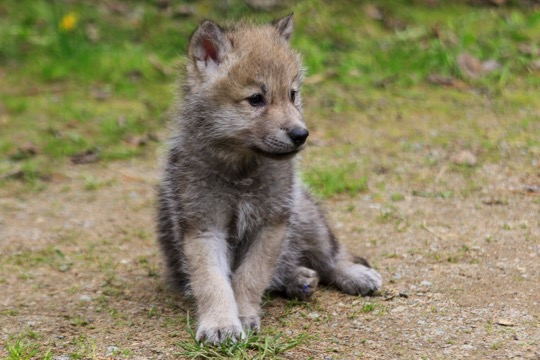
It’s pup season for the region’s wild wolves. Interpretive Center Director Krista Woerheide of the International Wolf Center in Ely told WTIP that raising pups is no easy feat, and it is a hard time for the entire pack.
Wolves in the Northland give birth between the end of March and the end of April. After about 63 days of gestation, wolves have litters of four to six pups. According to Woerheide, only about 50% of pups survive their first year, and researching what contributes to their high mortality rate can be complicated, because the pups are often hard to find.
“It’s hard to find the dens, and usually biologists are finding them because they have one or more of the adults in the pack collared and so they can track that,” she said.
If researchers are able to locate a den, there are special collars designed to grow with a pup and eventually fall off. Woerheide said that the use of those collars has helped researchers monitor the pups who survive, and study the ones who don’t. She said that recent findings have shown that for many pups who don’t survive their first year, the cause is often disease, including distemper, or starvation. Pups grow quickly and need a lot of food, and the strain of feeding an additional four to six wolves can be too much for a pack’s resources.
Despite the high mortality, Woerheide said that the wild wolf population in the region.remains stable.
At the International Wolf Center, while new pups will not be added to the pack this year, last year’s pups, Cedar and Rowan, are celebrating their first birthday. Woerheide said that a year in they weigh roughly 100 lbs, each, and the center is planning to mark this milestone birthday.
“We’re going to have a little party for them, and they’ll get a wolf approved cake,” she said.
WTIP’s CJ Heithoff spoke with International Wolf Center Interpretive Center Director Krista Woerheide. Audio of that interview is below.wolf
Kirsten Wisniewski April 22, 2026