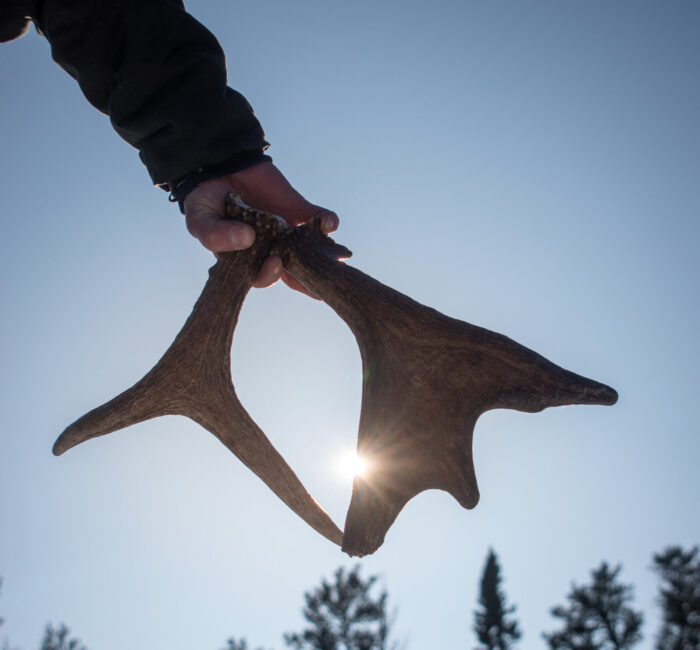
Why moose and deer shed their antlers each winter
As winter progresses, cervids such as moose and deer begin shedding their antlers, a natural, seasonal process triggered by internal biological changes.
It’s driven primarily by a post-rut drop in testosterone. After the breeding season, typically in late October and early November, testosterone levels in moose and deer begin to decline.
That decline triggers specialized cells known as osteoclasts, which break down bone tissue at the antler’s base, called the pedicle. Over several months, this process gradually weakens the attachment until the antler loosens and eventually falls off.
“It’s a complex process,” said Ron Moen, a wildlife biologist with the University of Minnesota – Duluth Natural Resources Research Institute.
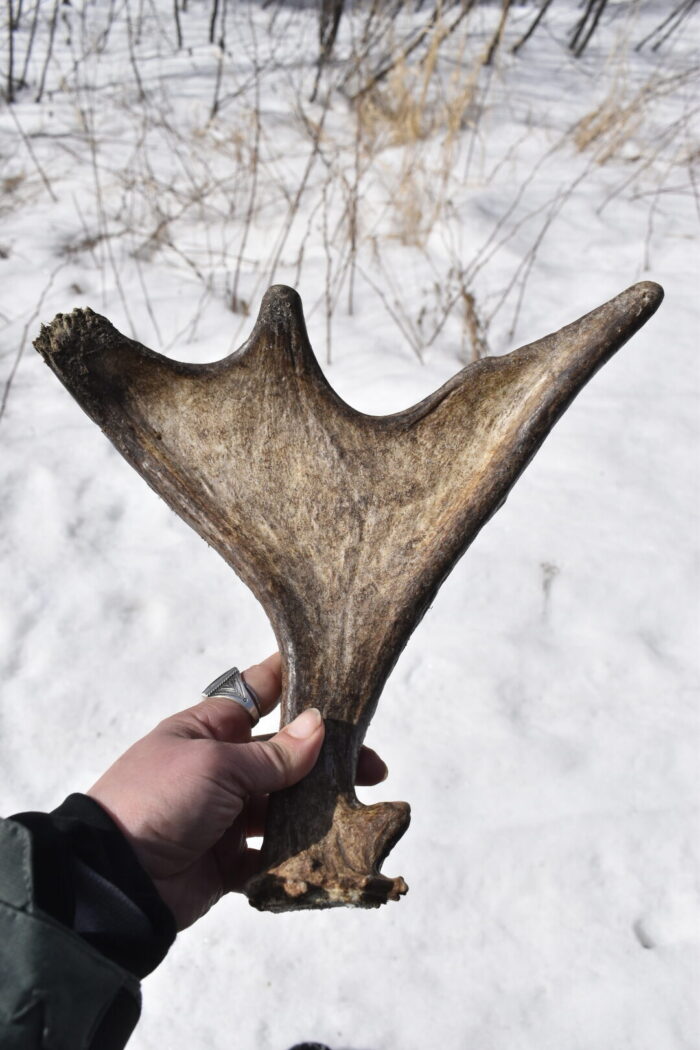
Small Moose Shed in Superior National Forest | Photo by Kalli Hawkins
Moen said the duration of the process varies by animal and depends on how physiologically strong the antler connection was, how quickly testosterone levels decline, and more. Depending on the animal and various factors, moose and deer will shed their antlers between January and March.
Moen said the entire shedding process takes months, and with each day that passes, the bond at the pedicle weakens.
After the antlers have fallen off, the moose and deer spend several winter months without lugging around additional weight. Then, in late spring and early summer, the antler regrowth process begins.
WTIP’s Kalli Hawkins spoke with Ron Moen, a wildlife biologist with the University of Minnesota – Duluth Natural Resources Research Institute, about the science and biology behind why cervids, such as moose and deer, shed their antlers each winter, and how those antlers grow back again each spring. The audio is below.
Kalli Hawkins February 11, 2026