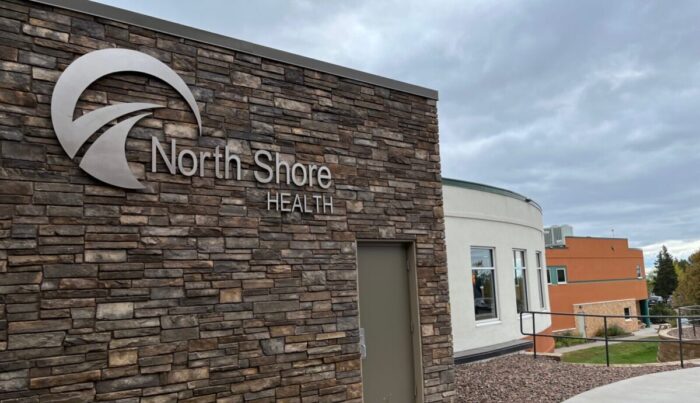
North Shore Health expects IRS payout as hospitals face strain
North Shore Health is poised to collect a $900,000 payout from the Internal Revenue Service, a move expected to strengthen the hospital’s financial position.
While North Shore Health’s finances remain stable, many hospitals across Minnesota and the country are facing significant challenges, with some closing.
The organization announced the IRS payment during its April board meeting as part of Chief Financial Officer Nicole Siegner’s monthly report. Siegner told the board that a rule change tied to the employee retention tax credit retroactively qualified North Shore Health for the payout.
“This kind of stuff is what keeps rural hospitals open,” Aspirus Lake View President Greg Ruberg said to the board after Siegner’s announcement. “Something like this is just a huge, huge accomplishment.”
Ruberg also discussed challenges facing the long-term financial sustainability of hospitals in Minnesota and around the country.
Last week, the Minnesota Senate passed a $700 million bill aimed at supporting Hennepin County Medical Center, though its future in the House remains uncertain. Another Twin Cities trauma center, North Memorial Health, said it lost $50 million in 2025 while laying off staff.
In Wisconsin, HSHS Sacred Heart Hospital and HSHS St. Joseph’s Hospital closed in 2024.
“There just aren’t many, if any, creative options left to sustain hospital operations,” Ruberg said. “We have hospitals begging like, what is there out there that we’ve missed?”
Ruberg said some hospitals have turned to local banks seeking low- or no-interest loans to stay open and meet payroll.
“This has been an ongoing struggle for probably 30-40 years, as the federal government has tightened the reimbursement policies and based payments on cost,” North Shore Health Board Chair Randy Wiitala told WTIP.
The challenges to pressure on hospitals to find creative revenue sources, including the employee retention tax credit and North Shore Health’s push for swing bed legislation last year.
The challenge is rooted in reimbursement gaps. Medicaid covers about 68% of hospital costs, while Medicare covers about 82%. Providers attempt to offset those shortfalls through commercial insurance, but rising costs continue to widen the gap.
“All of those costs go up, but if our revenue doesn’t go up, then again, the gap gets bigger,” North Shore Health CEO Kimber Wraalstad told WTIP. “The gap gets bigger, and it becomes a math equation.”
Financial pressures could intensify as the effects of House Resolution 1 take hold in the coming years. The measure is expected to reduce Medicaid funding, increasing strain on health care providers.
“We aren’t even dealing with the cuts that are going to impact all of us when those actually are instituted.,” Wraalstad said. “This is a systemic problem now, right now, and that’s what we’re dealing with. And so we’re trying to find a path. I’m not sure what the path is.”
WTIP spoke to Kimber Wraalstand and Randy Wiitala about the highlights from the April Board meeting. The audio of that conversation can be found below.
Josh Hinke May 6, 2026