Despite the late green-up, bears are active for Spring
Every spring, residents of the North Shore watch for a number of milestone nature sightings. Some watch for the return of their favorite warbler, others track the color shift of snowshoe hare coats from white back to brown. One seasonal change that is hard to ignore is the reemergence of Minnesota’s black bears after a winter of hibernation.
Minnesota Department of Natural Resources Bear Project Lead Andy Tri told WTIP that after heading into their dens in great condition, many are emerging still healthy and fat. He added that the reproduction rate over the winter was pretty typical, and that bears across the state fared well over the winter.
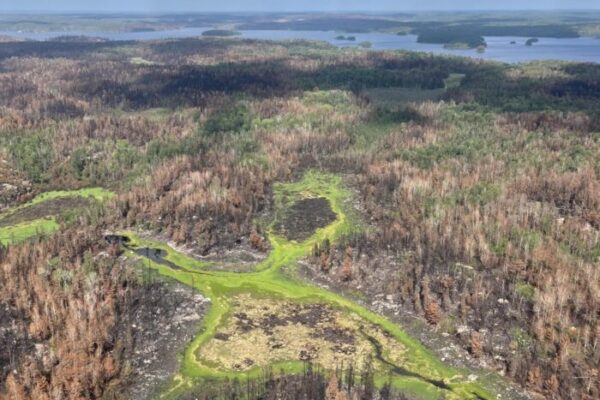
This spring has included a late green-up, with temperatures in the Arrowhead staying chilly through most of April and May. While this means a delay for some of the plants that bears typically eat in the spring, Tri said that at this point, researchers aren’t concerned. Early in spring bears rely on skunk cabbage and tree buds, both of which are present on the landscape, even if some other plants are late in emerging in full force.
While the vast majority of bears’ diets are composed of plant matter, Tri said that they also eat a lot of insects, especially larvae. In rare cases they have also been known to feed on carrion, fawns or moose calfs, but Tri said that their meat consumption tends be be opportunist, and, in the case of fawns and calfs, limited only to the point in spring when the cervids have just dropped their young.
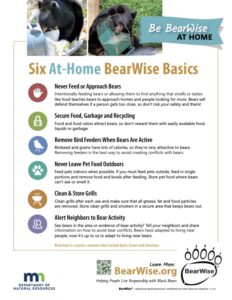
Though there is food available to bears upon their emergence from their winter dens, Tri said that it is an important time of the year for the human residents of bear country to pay close attention to bear attractants. He recommends that people consult the BearWise guidelines for information on reducing the likelihood of bear-human conflict.
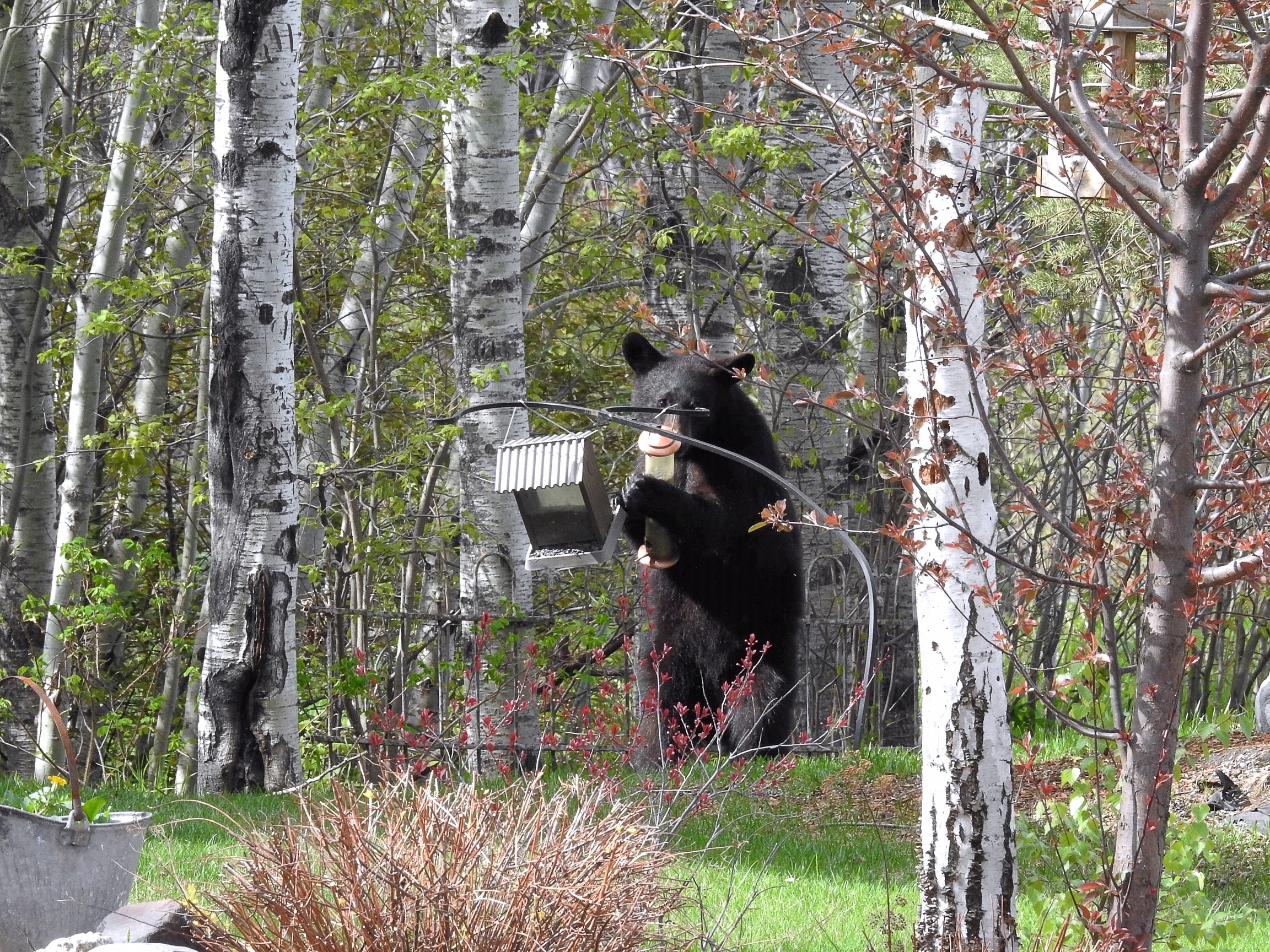
Significant attractants for bears include unsecured garbage, and accessible bird feeders. Tri also reminded those who keep poultry that any extra feed should be stored in a locked shed or garage, and, if possible, chicken keepers should consider an electric fence for their runs to protect their flocks. “We are in the heart of bear country,” Tri said. “We want to keep bears wild, chickens safe, and bears out of your stuff.”
Tri said that while black bears with cubs don’t pose the same risk that a grizzly with cubs might, those recreating outside should still be careful to avoid a conflict with recently emerged bears. He said that a good place to start is to keep dogs leashed. “I would say a proportion of the incidents where a bear makes a contact with a human and they get injured, dogs are involved, and it’s often off leash,” he explained.
In addition to keeping dogs leashed, Tri said that campers should keep food and scraps in bear-resistant containers, and even hikers might consider double-bagging any snacks they have on the trail. He said those who see a bear in the woods should give it space and remember that they are not inherently dangerous. “Take a picture, take a video, don’t get close to it, of course, but enjoy the moment,” he said. “But if it is approaching you, or if it sees you, you know, back away slowly. Don’t run, don’t leave your pack, just go back the way you came, make yourself big, and it’ll be an uneventful encounter.”
WTIP’s Kirsten Wisniewski spoke with Minnesota Department of Natural Resources Bear Project Lead Andy Tri about the spring bear emergence. Audio of that interview is below.
Kirsten Wisniewski May 22, 2026