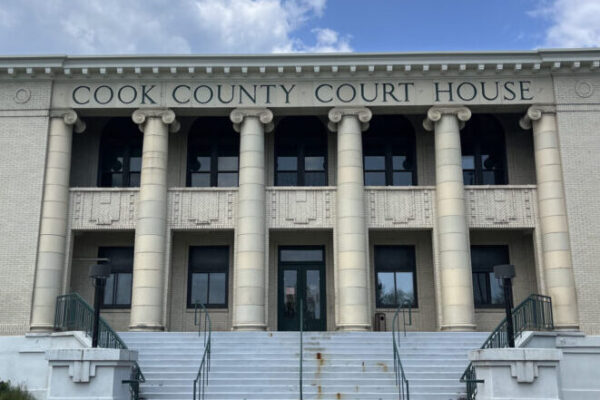
Cook County officials promote 988 Lifeline and mobile crisis services
Public Health Educator Andrea Orest and Crisis Responder Sara Eisenreich presented an update on the Mobile Crisis Response pilot program to the Cook County Public Health and Human Services (PHHS) board during its February meeting.
Orest told WTIP that the county is currently offering the full spectrum of mobile crisis services required under state statute, including community outreach and education to raise awareness of available services.
“There are certain requirements that we inform the public that the service is available, and what the service is,” Orest Told WTIP, “you know, the more people know that the service is available and what the service can do, the more people would potentially use it.”
Orest said statutes governing the program and staffing requirements have been among the program’s biggest challenges.
Last summer, amid turnover at PHHS, the Mobile Crisis Response team moved under the then-Public Health Supervisor, Grace Grinager. However, during the board meeting, it was indicated that the team would change who it reported to in the future.
“Cook County has a very low call volume to 988,” Orest said. “So while we have to statutorily provide the service, balancing what that looks like — if a staff person receives one or zero calls in a day — and really figuring out what that position looks like is a challenge.”
The Mobile Crisis Response team is available 24 hours a day. People can reach the service by calling the Suicide and Crisis Lifeline at 988 or by calling 844-772-4724.
Callers initially go through a screening process before being transferred to a local mobile crisis responder.
According to Orest, Minnesota saw a spike in crisis-response calls after the program aligned with the 988 Lifeline, followed by steady growth in the years since.
“And what that continued growth really shows is that more people are trusting and using the service, and a higher demand really helps to show how mobile crisis response can help fill the gaps available in services around the state,” Orest said.
The Mobile Crisis Response unit is designed to help people experiencing a mental health crisis by providing short-term stabilization without involving law enforcement and by reducing unnecessary visits to hospital emergency rooms.
Responders work under clinical supervision to connect people with appropriate help, whether that means linking them with a therapist immediately or helping them find longer-term support.
The goal is to provide face-to-face support. Responders can travel to a person’s home, but they can also meet people at a neutral location if that is more comfortable.
Orest said the next steps for the program include continuing collaboration with local partners such as the Cook County Sheriff’s Office, North Shore Health, Sawtooth Mountain Clinic and Grand Portage Human Services, while also continuing efforts to inform the community about the 988 Lifeline.
WTIP spoke with Andrea Orest about the Mobile Crisis Response program and how to get help during a mental health crisis. Audio of that conversation can be found below.
Josh Hinke March 9, 2026