Grand Portage man uses recovery journey to connect with and support others
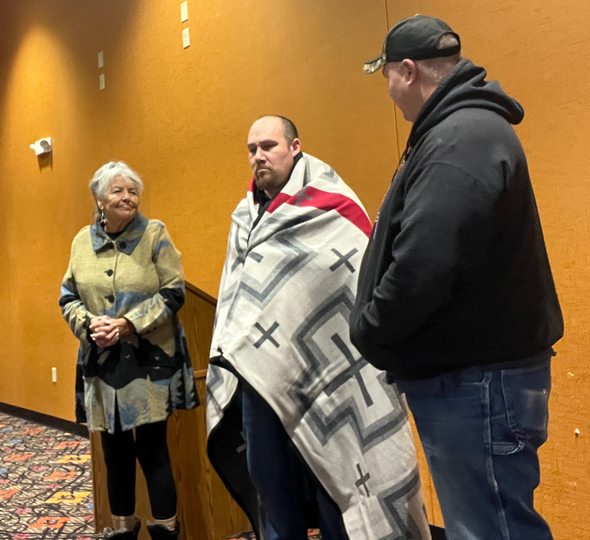
On Jan. 26, Robert James of Grand Portage was honored as a graduate of the Shore Substance Use Recovery Court. The ceremony marked his completion of a recovery program overseen by the Minnesota Sixth Judicial District. James has over 600 days of sobriety.
Substance Use Recovery Courts, or SUR courts, which are also sometimes called treatment courts, offer individuals who have been found guilty of drug or alcohol related charges with the option of committing to recovery programs, instead of serving jail time.
Those with an criminal history of violent offenses, drug trafficking, and sexual assault are typically not eligible for treatment court programs.
According to the national treatment court resource center, the goal of SUR courts is to recognize substance use disorders as a chronic disease, and to provide treatment and support for the disease, rather than punishment.
The first treatment courts in the U.S. were established in 1989. Now There are over 4,000 treatment courts across the country..
The Minnesota judicial branch describes the courts as a way to “stop the vicious cycle of relapse and recidivism by treating substance use and mental health disorders for individuals involved in the criminal justice system.”
Over the past 35 years, SUR courts have proven to be an effective alternative to long sentances for those with drug and alcohol related offenses. According to the Minnesota judicial branch, “Treatment courts are the single most successful intervention in our nation’s history for leading people living with substance use and mental health disorders out of the justice system and into lives of recovery and stability.”
Judge Steven Hanke, who presides over the Shore Substance Use Recovery Court, said that especially for people struggling with substance misuse in rural communities, access to treatment can be difficult. He said that it takes a whole team of people to provide SUR court services in the area.
“We have some team members from Cook County Public Health and Human Services, Grand Portage Band of Lake Superior Chippewa, we have Wilderness Outpatient, Arrowhead Regional Corrections, probation officers,” Hanke said. He added that while participants might be referred to inpatient programs outside of Cook County, since there is no inpatient program within the county, many are able to continue with further treatment through online platforms. Telehealth services allow people to return to their homes while still receiving support.
After his graduation ceremony, James told WTIP more about his experience in SUR court, and the treatment he accessed through it. He cited an inpatient program that was designed specifically for Native Americans who were seeking treatment as foundational to his recovery. “I just got to kind of reconnect with the people, our culture, some of our ceremonies, singing, the sweat lodge, which has been huge in my recovery,” he said. “That gave me a good base to come home.”
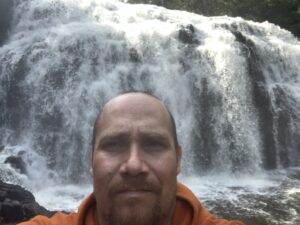
Photo courtesy of Robert James
James said that continuing to attend recovery group meetings has been a “lifeline” for him. He said he values the unity that comes from those support meetings, and that what he has learned has helped him both in his recovery, and more generally in his life.
Substance use disorder still carries a cultural stigma, and many don’t want to speak openly about it. For James, however, he said that sharing his experiences has been important in his recovery and in how he aims to contribute to his community. He said that dealing with substance use disorder can be isolating, and that he had to work through his own shame associated with substance use. As he has worked on his recovery, he is committed to trying to support others. “I work peer recovery here at Grand Portage human services now, and that’s kind of my superpower – that I’ve just came out of substance use disorder, so I can relate to a lot of people.”
“I think connection is like a good medicine when it comes to being sober,” James said. “It feels good just to spread the message that people don’t have to do it alone and not to be afraid to ask for help.”
The Shore Substance Use Recovery Court was founded by former Sixth Judicial District Judge Mike Kuzo in 2016. Judge Steven Hanke said that over the past 10 years, the program has seen between 20 and 30 graduations. He said that graduations are important to celebrate.
“These are the moments that we all strive for in our treatment courts, these graduation ceremonies where we get to celebrate the success of our participants,” Hanke said. “This one was especially unique because Robert, he works for Grand Portage Health and Human Services. He’s a mentor. He offers peer support and support for younger folks in his community, and so it’s great to have it up in Grand Portage.”
Hanke added that Jame’s participation in the program and his reliance on cultural ceremonies and tradition helped the SUR Court administrators understand the importance of culture and spirituality for those in the program. “It’s been a learning experience for us all, and we’ve been better for it,” Hanke said.
James also reflected on the graduation and what it means for his recovery. “I have, you know, the attitude of gratitude, very much. So in this graduation, it’s pretty surreal. I’ve come a long way,” he said.
James added that the graduation felt “surreal,” but that he was glad to be able to focus on this positive experience, and the new relationships he has been able to establish with his family and community through his recovery.
“It feels good to be out in the community in a positive way, and being an example that this life is possible for other people that suffer from substance use disorder,” he said.
An audio version of this story can be found below.
Kirsten Wisniewski February 2, 2026