North Shore Health CEO warns of health care threats, says hospital remains stable
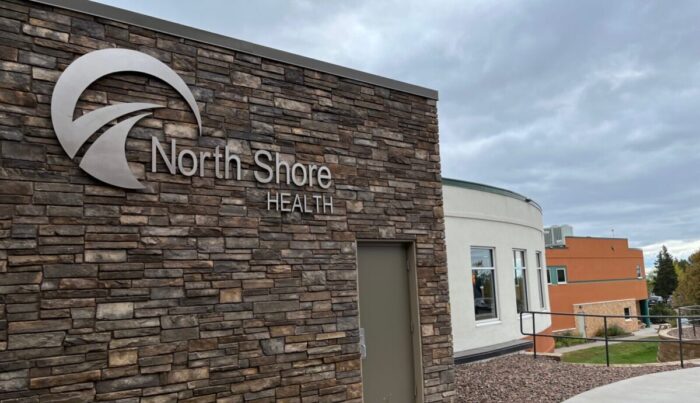
North Shore Health CEO Kimber Wraalstad said there is a “real threat to health care in general” as rural hospitals across Minnesota face financial pressure. Despite that environment, she said North Shore Health remains on stable footing.
“We also have an understanding that there are some other smaller rural hospitals that can’t make payroll,” Wraalstad told WTIP. “We are not in that situation.”
Her comments came after North Shore Health presented its 2025 financial report, which showed losses reduced by roughly 50% from the previous year.
“Do we have losses? Yes,” Wraalstad said, “That does include our non-cash expenses. And so our balance sheet is strong, and we’re still able to do the investments that we need to do.”
Wraalstad said the financial strain on hospitals extends beyond rural providers. She pointed to Hennepin County Medical Center, which is facing $50 million in cuts and eliminated 100 positions and five medical programs in late January.
North Shore Health has been navigating continued uncertainty in the health care landscape. In the previous state legislative session, the hospital supported “swing bed” legislation aimed at increasing reimbursement flexibility in order to generate additional revenue.
“It’s also why I say it’s a math equation, and we can’t continue to take cuts,” Wraalstad said. “We can’t continue to have cuts in Medicaid. We can’t continue to have cuts in for the long term care. We cannot continue to have federal cuts.”
Last summer, House Resolution 1 — known as the “One Big Beautiful Bill Act” — included reductions to Medicaid funding. Minnesota officials anticipate the state could lose $1.1 billion in health care funding, along with increased out-of-pocket costs for enrollees and additional administrative burdens for hospitals and counties.
The impacts of the legislation were also discussed by Public Health and Human Services Director Grace Grinager.
Congress created the Rural Health Transformation Fund in an effort to offset some financial pressures facing rural hospitals. Minnesota hopes to receive $193 million from the fund, though program details remain unclear.
While Wraalstad said she supports the state accepting the funding, she questioned whether it would substantially stabilize rural health care.
” I think that’s disingenuous, and I don’t think that’s realistic,” Wraalstad said. “There is no way that any funds that are available through this are going to cover the losses that are going to be seen in health care.”
According to Wraalstad, the state is considering using the Rural Health Transformation Fund to help hospitals retain programs and staff in rural communities and reduce the need for patients to travel to larger population centers for services. However, she said facilities would be required to create new projects to access the funding and would be reimbursed only after initial costs are paid.
During a late-2025 strategic planning session, board members were encouraged to focus on long-term sustainability. Consultant Steve Underdahl facilitated the discussion and summarized key takeaways during the January board meeting.
“He also emphasized that bringing a different type of agenda to the board meetings can be very helpful in focusing on those strategic — what we’re terming ‘big rock issues,'” Board Chair Randy Wiitala told WTIP. “Making sure that we’re touching base on those issues religiously during the board meetings.”
Wiitala said the board must remain focused on long-term priorities rather than day-to-day operations. He pointed to swing bed legislation and the care center transition as examples.
WTIP spoke with Kimber Wraalsta and Randy Wiitala about the upcoming legislative session, board officer positions, and more. Audio of that conversation can be found below.
Josh Hinke February 5, 2026