Ruby’s Pantry to cease operations, ending food distribution in Grand Marais and across the Midwest
Ruby’s Pantry, a rural food distribution program, announced on Tuesday that it will cease operations after two decades of service.
The organization collects surplus products from 150 food producers and delivers them to 87 rural communities across Minnesota, Wisconsin, Iowa, and North Dakota. Several Ruby’s Pantry distribution sites in northern Minnesota received surplus food products, including Grand Marais, Silver Bay, Eveleth, and Duluth.
In a Tuesday message, Ruby’s Pantry said over the past several months, the organization is no longer “financially sustainable” and as a result, has decided to end operations effective immediately.
“We recognize that this is difficult news to receive and do not take this decision lightly,” the Ruby’s Pantry message said.
Many of Ruby’s Pantry’s distribution sites, including Grand Marais and Silver Bay, were caught off guard by the Tuesday announcement.
“This announcement was unexpected,” the Silver Bay Ruby’s Pantry Team said in a Facebook post. “Ruby’s Pantry has been a blessing for many families in our community. Thank you for the opportunity to serve you by purchasing shares.”
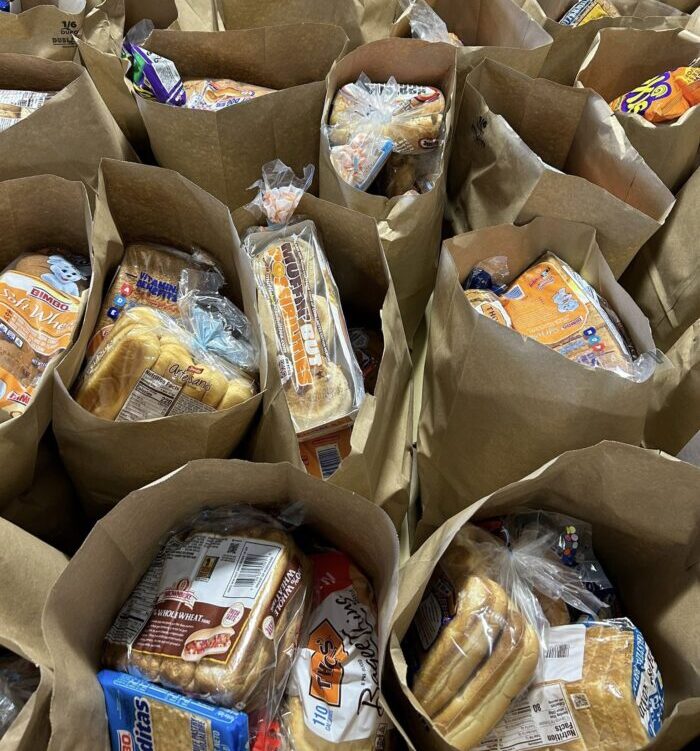
Ruby’s Pantry operates by having individuals purchase a “share” of the food delivered to their distribution location. The cost of a share was $25 in Grand Marais, which helps cover transportation costs. By purchasing a share, an individual could collect a variety of surplus food products, including condiments, bread, canned goods, meat, and more, to help alleviate grocery costs.

Cook County Ruby’s Pantry volunteers help to distribute food | Contributed Cook County Ruby’s Pantry
In 2025, Ruby’s Pantry distributed 34 million pounds of food, according to its website. The distribution of food required the dedication of over 17,000 volunteers each year across the three Midwest states.
On distribution day in Grand Marais, it was a community gathering, with numerous volunteers over the past decade coming together to hand out food to those in need.
“We are grateful for the volunteers who have supported Ruby’s Pantry in Cook County for roughly 12 years!” the Cook County Ruby’s Pantry team said in a Facebook post. “We are also thankful for everyone who has received a share! A special thank you to Spirit of the Wilderness for the many years of leadership in coordinating Cook County Ruby’s Pantry.”
Food access in Cook County has been a focus of community organizations and county officials more recently amid changes to federal funding of the Supplemental Nutrition Assistance Program (SNAP), and rising food costs and inflation.
In interviews with WTIP, Cook County Public Health and Human Services (PHHS) officials have said one in ten Cook County residents experiences food insecurity.
Over the past year, PHHS officials launched a pop-up pantry pilot program in the Cook County Courthouse that provided food pickup for those in need. The pantry accepted donations of nonperishable, shelf-stable items or household goods. The pilot program is set to expire on April 1, 2026.
A new Food Access Council group was also formed to address food resource gaps for Cook County residents. The Food Access Council is holding a regularly scheduled meeting on Wednesday, April 1 at Cook County Higher Education. WTIP will be attending the meeting and will provide additional information regarding the Ruby’s Pantry closure.
The closure of Ruby’s Pantry also comes amid changes to the SNAP program, which provides assistance to about 1 in 8 Americans to help buy groceries, the Associated Press reports. The program is estimated to cost approximately $8 billion per month nationally.
At the start of 2026, the program expanded work requirements for many adult SNAP recipients. The updated requirements are that a SNAP recipient who is physically and mentally able to work must work at least 80 hours a month, or about 20 hours per week. Those who don’t are limited to three months of benefits over a three-year period.
The new law applies those requirements to those ages 55 through 64 and to parents without children younger than 14. It repeals work exemptions for homeless individuals, veterans, and young adults aging out of foster care. And it limits the ability of states to waive work requirements in areas lacking jobs.
The new requirements are expected to reduce the average monthly number of SNAP recipients by about 2.4 million people over the next 10 years, according to the Congressional Budget Office.
The work requirement isn’t the only change to SNAP eligibility.
Starting in October, states will be required to cover three-fourths of the administrative costs. Currently, state and federal governments split the states’ program costs roughly equally. In late 2027, states with higher error rates in payments will be required to cover some of the benefit costs.
This is a developing story. Check back for updates.
Kalli Hawkins April 1, 2026