SGSD townhall meeting draws large crowd
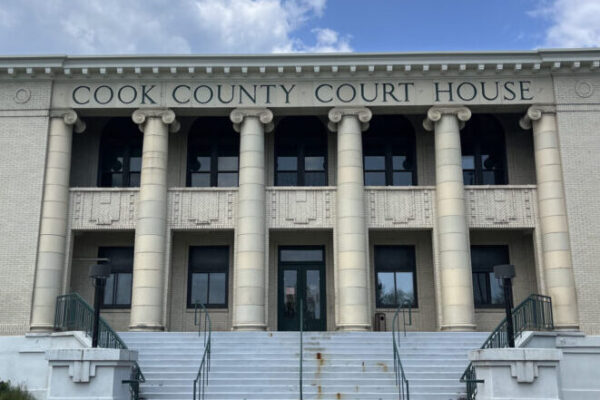
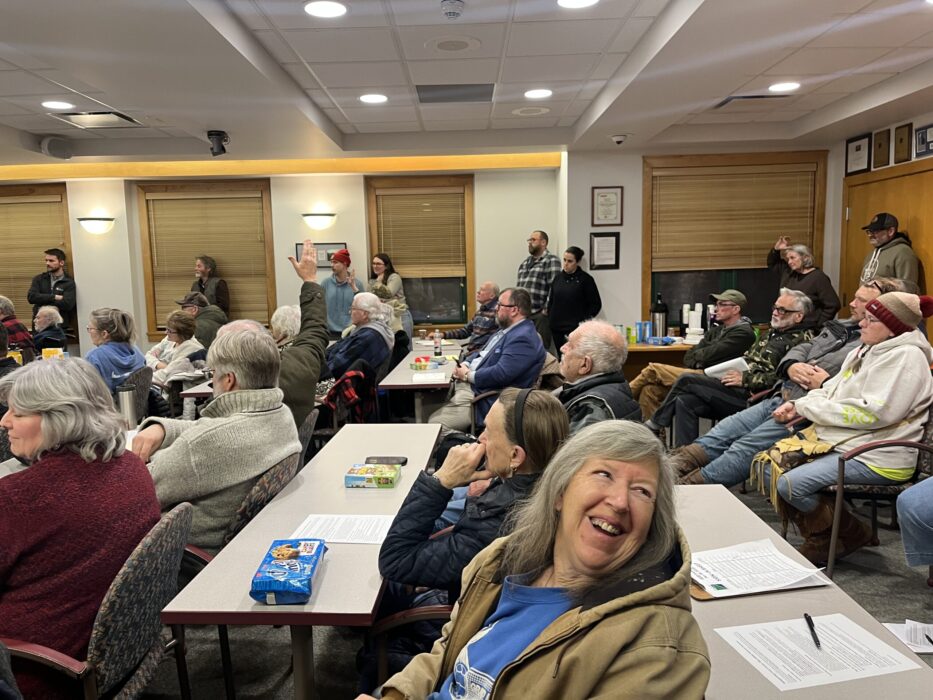
It was standing-room only at a Jan. 28 town hall meeting focused on Subordinate Governmental Service Districts (SGSDs). Over 50 members of the public attended the meeting, which was hosted by the Cook County Board of Commissioners.
SGSDs allow property owners on some non-county roads to pay a special assessment used by the county to arrange for road maintenance with outside contractors. The county Highway Department carries out the administration of the work, but not the physical work itself. The county has been discussing the possibility of eliminating SGSDs for several months during board meetings.
Town hall vs public hearing
The meeting was purely informational for the public and county officials. It was a chance for the county to hear directly from community members, and for the public to ask questions. No decisions were made at the meeting, something emphasized by Commissioner Dave Mills both during the Board of Commissioners meeting on Jan. 27, and at the beginning of the town hall meeting.
For the county to make any changes to the SGSD policy, it would need to hold a public hearing, where community members could enter statements into the official public record. Administrator Kristen Trebil-Halbersma told WTIP after the town hall that the meeting allowed for a more informal conversation to take place before any final decisions. “We don’t necessarily have all of the facts on how different things impact the community. So it’s always important to make sure that we’re hearing feedback from the community as we make decisions,” she said. “So I think the town hall was the right approach to make sure that we heard that feedback.”
Key concerns from the county
Over the past several months, the board has heard from various county department leaders, especially Highway Engineer Robbie Kimmel-Hass, about the SGSD program. Kimmel-Hass has advocated for the county to dissolve the districts.
The meeting included information presented by Kimmel-Hass, Auditor-Treasurer Braidy Powers, Assessor Bob Thompson, and Management Information Systems Director Rowan Watkins, who represented the various departments who play a role in maintaining the SGSD program.
During the town hall, the county employees outlined the reasons that some favor an end to SGSDs. Concerns from the county included:
- the use of county resources on non-county roads
- jurisdiction issues for roads that fall under a different organization’s control
- resource allocation and future equity issues related to who qualifies for the program
- inconsistency of services able to be contracted for
- difficulty in soliciting bids for maintenance work and the obligation for the county to accept the lowest bid
Key concerns from the public
In addition to the county’s presentation, members of the public were invited to ask questions and share their concerns. When asked for a show of hands at the beginning of the meeting, most of the attendees responded that their properties were in an SGSD. Of the community members who spoke on Wednesday evening, the vast majority favored keeping SGSDs.
Those who support the continuation of the SGSDs voiced worry over what could happen to property values and insurance rates if the districts were dissolved. Thompson assured attendees that his office does not consider what type of road a property is on in their assessments, and whether that road is maintained. However, some property owners, including Gina Joyce, said that they have heard from their mortgage companies that an attempt to establish a Home Owners Association would require permission from lenders. Joyce told WTIP after the meeting, “I spoke with the CEO of my mortgage lender, and I spoke with my attorney, both of whom said, if you do away with this SGSD, you are shifting risk and liability, and you’re also now jeopardizing your financing and insurance.”
There was also concern over the road conditions and whether the roads would remain usable by emergency services vehicles without the SGSDs. Kimmel-Hass reminded the attendees that even if the SGSDs were dissolved, the property owners currently in the SGSDs could still arrange for the maintenance to continue on those roads, because the work is done by contractors, and not the county.
Several meeting attendees whose properties are part of an SGSD expressed their willingness to pay more for the program if the current amount they are assessed for is not covering the real cost to the county.
Equity
If the county board opts to dissolve the SGSDs, property owners would have several options for their road’s maintenance, ranging from an informal arrangement with neighbors to establishing an official Property Owners Association or HOA. One person in attendance spoke from the perspective of someone who, along with her neighbors, has established a Road Association. She said that while it is a lot of work to arrange the maintenance, it is possible to manage without county assistance. She mentioned, however, that her road previously attempted to establish an SGSD, and were turned down. She urged the county to consider the specifics of the program and how decisions are made regarding which roads are accepted.
The question of equity has been raised previously in discussions around SGSDs. During the meeting, Watkins spoke about how making the program more accessible could further impact the county’s capacity. “If we are going to keep this process, from an equity standpoint, the county needs to be able to facilitate that service to other people.”
If the program is not dissolved and instead made more accessible, Kimmel-Hass said it could stretch his department beyond their current capacity. This could result in the need for more staff to cover the administrative tasks.
Road jurisdiction
During the meeting, Kimmel-Hass raised the issue of road jurisdiction, saying that there are concerns about whether the county should be organizing the maintenance of roads that are not only not on the county roster, but, in some cases, fall under the jurisdiction of the National Forest Service or the Department of Natural Resources.
Some meeting attendees suggested that the county take over all of the roads in the county, the way the Grade has changed hands. Kimmel-Hass said that for at least one of the SGSDs, the one on Murmer Creek Rd, his department is currently working on making it a county road. He added, however, that this is not necessarily possible for all of the roads in the county. County roads need to meet a series of standards, including road width and clearance, and meet drainage requirements. He said that bringing many sub-standard roads up to the county requirements would be expensive.
Commissioner Deb White mentioned that the improvements to the Grade, before the county took it over, cost close to $1.5 million per mile of road.
Kimmel-Hass also added that if the county were to fully take on the maintenance of many more roads in the county, his department would need more staff and equipment in order to do work in a timely manner. “It gets to the point of capability and capacity,” he said at the meeting. “We could plow every single road in the county – happy to do it – it’s going to take a week before we get to your road.”
Commissioner Garry Gamble pointed out that an expansion in staff or equipment could result in a several-point levy increase.
The next steps
The county has stated that no matter what decision the board may end up making, the work planned through the winter and for the summer this year will be completed. Kimmel-Hass told WTIP that this was the fastest possible timeline. The commitment to continue at least through summer was not an announcement from the county that services would not continue beyond the season.
“Our goal is to not leave anybody hanging. You know, we want to set everybody up for success the best we can,” Kimmel-Hass said, adding that it was unlikely that the county would follow the timeline he outlined.
During the town hall, Mills said he anticipated that the conversation about the future of SGSDs, and the process of making any changes to the county’s policy could take much longer.
Moving forward, there was interest from both town hall attendees and county employees to form a work group to discuss the question of whether to continue the SGSD program. Members of the public said that they want more direct communication from the county, and Trebil-Halbersma told WTIP that as the board continues to collect information ahead of any decisions, the county will continue to share information with the public.
After the town hall meeting, Robbie Kimmel-Hass and Gina Joyce, a Cook County resident concerned about the future of SGSDs, each spoke with WTIP’s Kirsten Wisniewski. Administrator Kristen Trebil-Halbersma spoke to WTIP the following morning live on Daybreak. Audio from conversations with each of those individuals can be found below.
Kirsten Wisniewski January 29, 2026