Spiny water fleas continue to spread in Cook County, detected in Boundary Waters lake
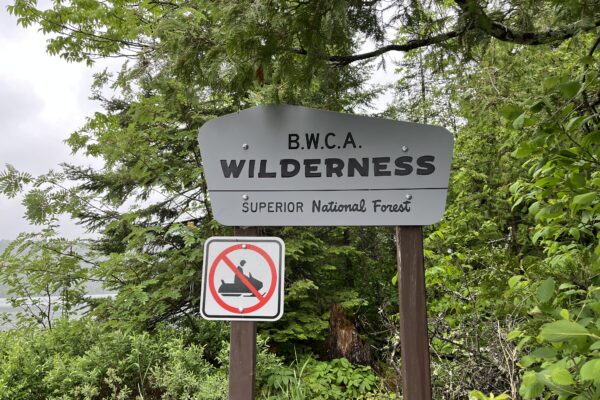
Spiny water fleas continue to expand into lakes across Cook County, with the latest discovery reported in the Boundary Waters Canoe Area Wilderness (BWCAW).
A Grand Marais resident and University of Minnesota Extension volunteer discovered the invasive aquatic species in Daniels Lake during a canoe trip in September, according to a report published this week by the University of Minnesota Extension.
Daniels Lake, a roughly 500-acre lake in the BWCAW, is accessible only by canoe and portage from Bearskin Lake near the mid-trail area of the Gunflint Trail.
The discovery marks the first new Minnesota lake where spiny water fleas have been detected this year, according to Megan Weber, an Extension educator who leads the AIS Detectors volunteer program.
In late 2025, spiny water flea was detected in Poplar Lake, a popular recreation spot and BWCAW access point along the Gunflint Trail.
While on a canoe trip on Daniel’s Lake this fall, Grand Marais resident Scott Hollander collected a water sample, not expecting to find spiny water flea.
However, the sample, confirmed by the Minnesota Department of Natural Resources (DNR), showed it contained about 40 spiny water fleas.
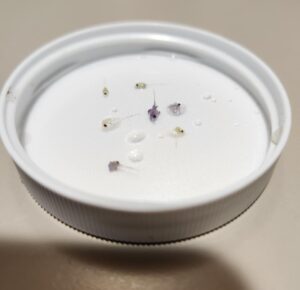
Some of the spiny water fleas found in Daniels Lake were purple | Photo by MAISRC and Amanda Weberg
Before testing Daniels Lake, Hollander completed the AIS Detectors Core Course and had practiced identifying the species with Cook County Aquatic Invasive Species Supervisor Amanda Weberg at Devil’s Track Lake, where a known population of spiny water fleas exists.
Impact of Spiny Water Fleas on aquatic ecosystems
The spiny water flea originated in Europe and Asia around the 1980s, and it is suspected to have made its way to the Great Lakes through ballast tanks on freighter ships. Researchers officially detected the invasive species in Lake Superior in 1995, and it has since spread to inland lakes throughout Minnesota and neighboring states.
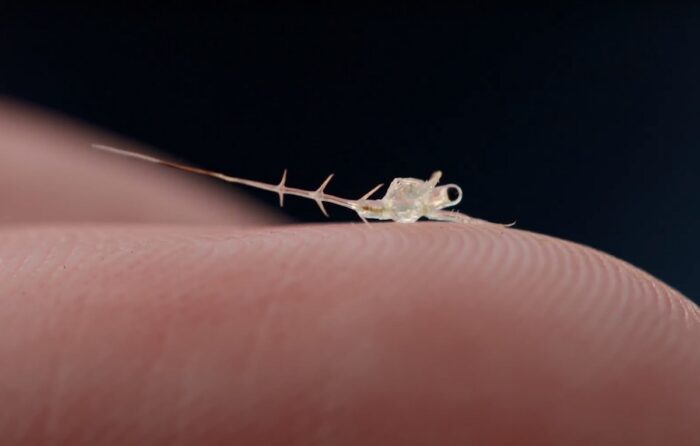
The small crustacean has a small body and a long spiny tail. Adults range from 1/4 to 5/8 inches long and are generally opaque, but have been reported to be green, blue, or, more uniquely, purple.
In past interviews with WTIP, Weberg said once introduced to a lake, the spiny water flea feeds on daphnia, the native zooplankton in northern Minnesota lakes. Daphnia is an essential food source for native fish species. Weberg said that native fish, such as walleye and lake trout, do not tend to eat spiny water fleas.
Weberg said spiny water fleas ultimately disrupt the aquatic food chain by consuming nutrients and food that native fish need to grow, mature, and reproduce.

Spiny water flea | Photo by Amanda Weberg
Daniel’s Lake is a popular summer and winter BWCAW fishing lake, predominantly for lake trout.
While spiny waterflea may be transferred from lake to lake by motorized boat or canoe, it can also be spread via fishing line. Other lakes in Cook County with documented spiny water flea populations include Devil’s Track, McFarland, Saganaga, Greenwood, Gunflint, Flour, and numerous other BWCAW lakes.
Hollander is one of many local AIS detector volunteers who assist Weberg and the Cook County AIS Department.
“There is a whole series of lakes interconnected by portage that so many of us cherish,” says Hollander in the report. “I believe we need to protect the environment. Volunteering is one way I can help do that.”
Minnesota residents can volunteer to become an AIS detector and request a testing kit from the University of Minnesota Extension at no cost. Kits are available in Grand Marais at the Cook County Community Center.
Find more information, guidebooks, and training videos at the Minnesota Aquatic Invasive Species Research Center Spiny Surveillance website.
Listen below to a September 2025 WTIP interview with Amanda Weberg about spiny water flea after the species was detected in Poplar Lake.
Kalli Hawkins November 1, 2026