Three years in, Grand Portage bison herd grows as food sovereignty efforts take root
In April, the Grand Portage Band of Lake Superior Chippewa reached the three-year mark of raising bison as part of a broader effort to strengthen food sovereignty.
“It’s really just about providing healthy meals, healthy meat, and healthy foods to our community,” said Jared Swader, the Grand Portage tribal planner and bison herd manager.
The bison program had been discussed for decades before becoming a reality in April 2023, with the arrival of seven bison. Swader said the effort was launched in part to help supplement traditional food sources as moose populations declined in northeastern Minnesota, a resource the Band had long relied on.
Over the past three years, the Band has worked in collaboration with the InterTribal Buffalo Council (ITBC), a collection of over 80 tribes, to facilitate the management of bison. ITBC assists and works with the National Park Service and the U.S. Fish and Wildlife Service for the relocation of bison through the bison surplus program. To control bison populations within NPS units or wildlife refuges, a select number of bison are removed and relocated to ITBC Tribal members across the U.S.
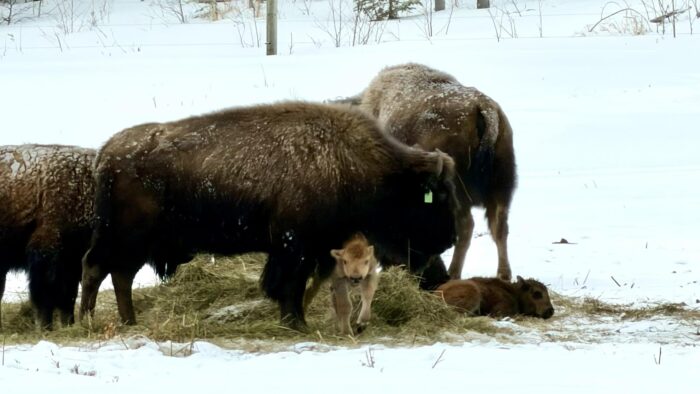
The Grand Portage Band received bison from Yellowstone National Park last summer as part of the program. With the addition of new bison and genetics, the herd has grown. This spring, with the recent arrival of seven new calves, the herd now sits at 34.
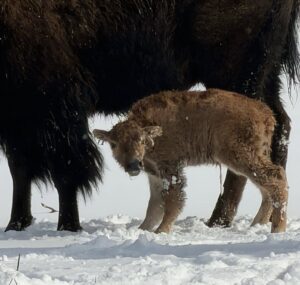
Grand Portage Bison Calf | Photo by Jared Swader
Swader said the Grand Portage Band’s goal is to maintain a herd of about 35 to 50 bison. “We’re getting really close to that now.”
Since 2023, four bison have been harvested, resulting in 2600 pounds of meat distributed to tribal members.
Swader said after a bison is harvested, he and Bison Technician Andrew Anderson skin and quarter the bison in a harvest trailer in the pasture. Then the meat is brought to a butcher for packaging. After the packaged meat is returned, the Grand Portage Band holds a “community feast” where everyone puts together a potluck-style dish using the bison meat,” Swader said.
“Once that meal is done, we are able to send everybody who showed up home with a roast, a couple of steaks, as well as some ground bison,” Swader said.
He said that is one of the most rewarding parts of the program, because “That’s the whole purpose of it – is getting the meat into people’s hands, in their homes.”
While the Band has harvested four bison so far, Swader said it may take a few more years for the program to fully pay off and for the bison harvest to meaningfully supplement and support food sovereignty at its full capacity.
Once the herd reaches the targeted 35-50 animals, then Swader said the Band intends to harvest five to seven bison annually.
“I think it’ll make a larger impact on our community,” Swader said.
WTIP’s Kalli Hawkins spoke with Grand Portage Bison Herd Manager and Tribal Planner Jared Swader, following the three-year mark of the bison program, to learn more about the program and managing a herd in northern Minnesota, how the program fits into food sovereignty, and more. Audio from the interview is below.
Kalli Hawkins May 13, 2026