


Trail Time – Golden
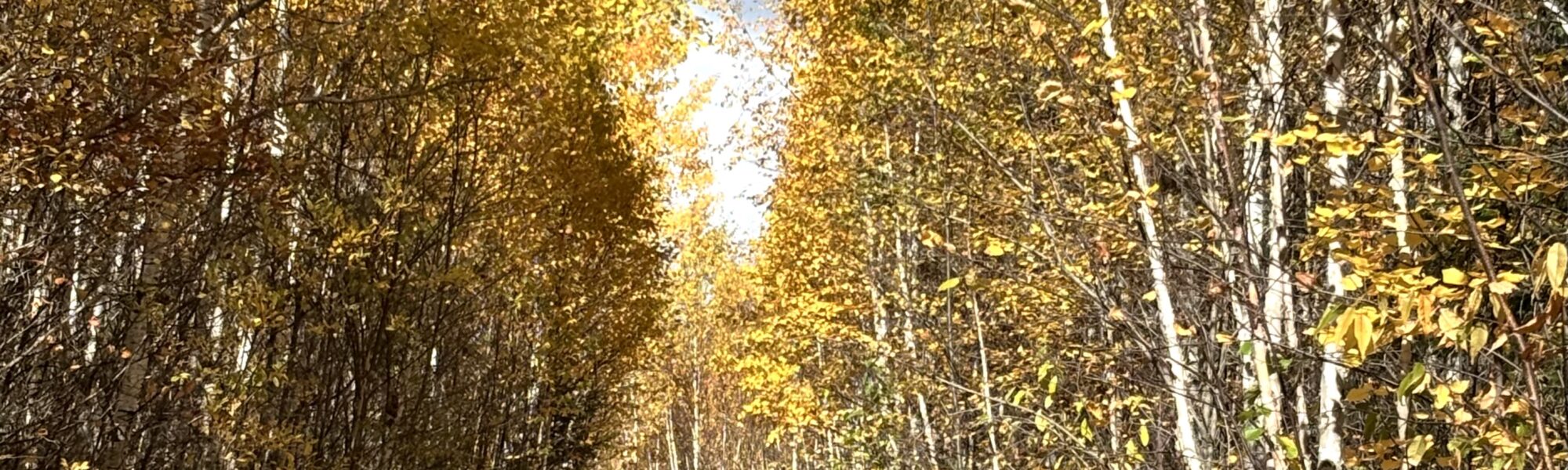
Golden. That is the word for today. The aspens are glowing — absolutely filling the air with their golden light. We have been blessed with a long string of mild weather and today is no different. Sunny skies, vigorous winds with high-growing stacks of cumulus clouds scudding across the blue. The wind is loud and boisterous today, gusting and working hard to remove the leaves. The aspens are stubbornly hanging on to some, but enough leaves are floating down to the ground to make it look like the roads are paved with gold.
As I’m writing, I keep taking looks out the window and the beauty of this fall brings tears to my eyes. It is so very lovely! And I have it on good authority from an old-timer that this is one of the best years ever for fall color on the Gunflint Trail. A few days ago it was cloudy, but the distant aspen-covered slopes in Canada were getting hit by sunlight. It was breathtakingly beautiful.
The tamaracks have starting turning, too. Our only deciduous conifer, tamaracks drop all their needles each winter. The white pines have started shedding needles as well. It can look like they’re dying, but it’s a normal part of a pine’s life cycle. It’s called seasonal needle drop. You can tell the tree is not diseased because the needles that are turning brown are near the trunk. Pine needles only live a few years before they turn yellow, then brown and then drop to the ground, forming a thick mulch around the roots of the tree, helping to hold moisture.. There are always a few years’ worth of green needles to do the job of producing food for the tree. Since the needles stay on year-round, pine trees continue to photosynthesize even during milder winter weather.
Our recent good weather has given us a breather after a very hectic summer. It’s great to have a pause before winter comes. A short pause, of course, because of all the jobs that need doing to prepare for snow. You all know the drill: docks and boats stored, outdoor furniture moved, sprinkler systems drained, gardens put to bed. Each season has its own tasks. We are like ants that way. But we can also be like grasshoppers and enjoy what we have right now: beautiful forests, clean air, dark nights and clear water. How fortunate we are to have these wilder parts of Minnesota protected, where moose and black bear, wolf and foxes can roam and thrive. Especially moose.
Though we don’t have the number of moose that we used to, it’s pretty well accepted that the population has leveled out. Forest fires, both controlled and wild, help keep the forest healthy. Young aspen, willow and birch are some of the species that grow first after a fire or disturbance, and these young trees provide food for mooz, or moozoog, the twig-eaters, as their Ojibwe name describes them. The word “moose” was borrowed from Ojibwe, along with other loan words like chipmunk, moccasin and Mississippi. The Gunflint Trail is on land where Anishinaabe have lived for centuries.
If you are interested in learning more about Anishinaabe history, Chik Wauk museum has a new exhibit this year called “Zagaandagaa-Anishinaabeg, People of the Thick Coniferous Forest.” The exhibit explores the history, culture and experience of the Anishinaabe people in the border lakes region, from pre-European contact time into the 20th century. Local Ojibwe descendants, who have lived in the area for generations, gave input and stories from their personal histories. A mural painted by local artist Sam Zimmerman shows Ojibwe clan animals. A giant bronze turtle was installed in the museum, highlighting the creation story of Turtle Island. There’s a video that tells the story of Chief Blackstone’s last walk, animated by Johnny Thunder. Laura Powell and Carl Gawboy both have illustrations and art in the exhibit. Chik Wauk will be closing for the season October 18, so you’d better hurry if you want to see the new exhibit before next spring.
—Marcia Roepke


