As legislative session begins, a look at top legislative priorities for Cook County
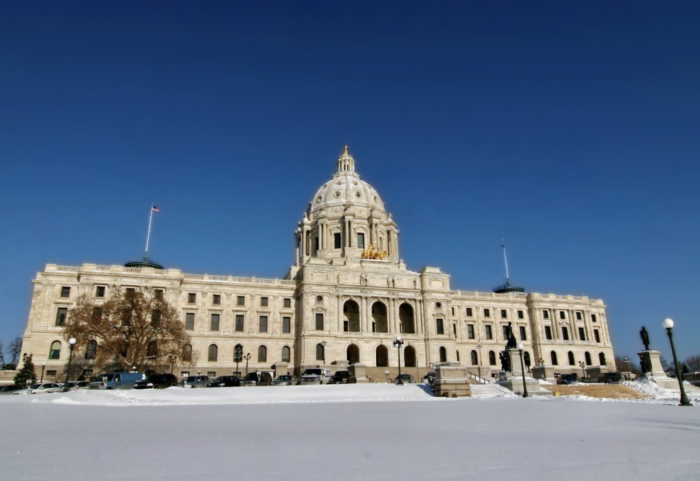
Minnesota lawmakers returned to the State Capitol on Tuesday, Feb. 17, to begin the 2026 legislative session.
Ahead of the session, both Republican and Democratic lawmakers held press conferences to outline legislative priorities.
House Speaker Lisa Demuth (R-Cold Spring) said the focus for Republicans will be on addressing fraud in state government, affordability, safety, and reducing school mandates.
Republican lawmakers say a bill sponsored by Rep. Patti Anderson (R-Dellwood) will be a top priority this session. The proposal, introduced as HF1, would establish an independent Office of Inspector General to investigate and address suspected fraud, misuse, and other unlawful uses of public funds in state government, with a focus on providers and recipients of state-funded services.
On the DFL side, lawmakers outlined legislative priorities focused on how the state should respond to the actions and policies of federal agents from U.S. Immigration and Customs Enforcement (ICE) and Customs and Border Protection (CBP). Other priorities include protecting privacy and addressing accountability issues.
Sponsored bills include HF3412, which would require federal agents to exhibit visible identification and not wear masks. Bill HF3358 would require federal agents’ vehicles used to transport detainees to be marked as law enforcement vehicles.
Rep. Leigh Finke (DFL- St. Paul) spoke during the Monday press conference and said, “These are easy policies to understand and get behind. We should be able to go into the House and get not just the one vote we need to pass them, but countless Republican votes to support these.”
The Minnesota Legislature is narrowly divided, with Democrats holding 101 seats and Republicans holding 100. Given the slim margin, bipartisan cooperation will be essential for lawmakers this session.
Working across the aisle is a common practice for northern Minnesota leaders like Senator Grant Hauschild and Representative District 3A Roger Skraba.
In November 2025, Sen. Hauschild and Rep. Skraba visited Cook County to attend a legislative luncheon hosted by the Cook County Chamber of Commerce at Charlie’s Alpine Bistro in Lutsen.
During the event, Hauschild and Skraba spoke about the importance of working across the aisle to accomplish numerous legislative priorities in 2025, including swing-bed legislation and tax changes for seasonal recreational properties.
Looking toward 2026, Hauschild said in November that some priorities will include advocating for funding for public lands, payment-in-lieu-of-taxes (PILT), paid family and medical leave impacts for small businesses, and funding for rural EMS, among other issues.
“I think it’s going to be ongoing work on the core issues we focus on while also looking ahead to some reforms that can make the government work a little bit better for our rural communities,” Hauschild said during the November legislative luncheon.
Skraba and Hauschild also discussed during the November event the importance of state bonding for public infrastructure, transportation, and other capital improvement projects in their respective districts, including Cook County.
Skraba said it is all about demonstrating the need vs. the want. “Defining the need, then I think we have a better chance.”
Legislative Priorities for Cook County
Gunflint Trail road improvements
When it comes to Cook County’s 2026 legislative priorities, city and county leaders have been busy working with lobbyists ahead of the upcoming session to outline specific requests.
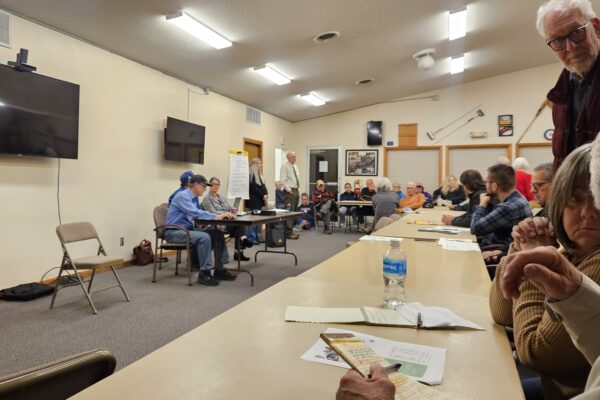
During a Tuesday, Feb. 17, Cook County Board of Commissioners Committee of the Whole work session meeting, county employees and commissioners discussed specific projects related to transportation, capital improvements, and more.
Cook County Highway Engineer Robbie Hass said one of the main highway department priorities is securing funding for improvements for the last 10 miles of the Gunflint Trail. The 10-mile section of road is part of the Gunflint Trail Scenic Byway and serves as an access point to the Boundary Waters Canoe Area Wilderness. The Gunflint Trail section is also integral for emergency access for first responders, firefighters, and law enforcement.
The entire 10-mile section needs resurfacing, 16 culvert replacements, and four bridge replacements.
Hass said the total projected cost for the project is $15 million. The highway department has already secured $3 million toward it, but more state, federal, and grant funding is needed.
On Thursday, Hass said he will be speaking with Hauschild and Skraba to reiterate and emphasize the need for the Gunflint Trail improvement project.
Public Health & Human Services
Several priorities tied to the Public Health and Human Services Department remain top of mind for county leaders. During the Feb. 17 Committee of the Whole work session, officials reviewed a one-page summary outlining their 2026 legislative priorities, many of which focus on health and human services. Among the priorities are securing funding to address potential changes to Medicaid and the Supplemental Nutrition Assistance Program (SNAP), supporting modernization and replacement of aging technology systems, and maintaining funding for child care assistance programs.
The identified health and human services priorities are not unique to Cook County. The Association of Minnesota Counties (AMC), which represents all 87 counties across the state and advocates on their behalf at the Legislature, has also included these issues among its top priorities this year.
During the legislative session, AMC will advocate on behalf of all counties to support legislation that mitigates the impact of SNAP and Medicaid policy changes that may result in higher costs for Minnesota property taxpayers. The reduction in federal funding is projected to range from $125 million to $168 million each year. The Minnesota Legislature will decide whether the costs will be covered by the state or shifted to counties, which is expected to lead to increased local property taxes.
View the full list of AMC and the Minnesota Association of County Social Services Administrators’ 2026 legislative priorities here.
Grand Marais Wastewater Treatment Facility
A focus of the City of Grand Marais in recent years has been to secure state bonding assistance for the wastewater treatment facility to address deteriorating infrastructure, antiquated technology, odor control, and other issues.
The total projected cost of the project is $10 million. The city is seeking $5 million in state bonding for the project. Given that the Grand Marais Wastewater Treatment Facility is the only public facility in the county, the need for improvements is supported by several county stakeholders, including the Cook County Housing Redevelopment Authority (HRA), Cook County Economic Development Authority (EDA), Board of Commissioners, Visit Cook County, and the Cook County Chamber of Commerce.
Hauschild and Skraba have in the past supported bills HF3341 and SF 3538 to provide $5 million in state bonding for the project.
Cook County Schools ISD 166
Several identified legislative priorities for 2026 related to education and Cook County Schools have been the seasonal recreational property levy replacement aid, previously introduced by Hauschild as SF 1197. The bill would change how taxes are collected from seasonal recreation properties, and how it would be used. Skraba has also co-authored HF1161, a companion bill in the House.
Other related priorities outlined by Cook County Schools Superintendent Chris Lindholm are HF1035 and SF1617, which would provide a construction sales tax exemption for the Cook County Schools bond referendum project. Cook County voters recently passed a 2024 and 2025 bond referendum for school facility improvements.
Another priority is to maintain the inflationary index for the general education formula, fully fund unemployment for non-licensed staff or remove it, and continue to fund and close the special education cross-subsidy.
North Shore Health
North Shore Health leaders are advocating for the Rural Health Transformation Program, which will assist rural hospitals and towns by providing funding to improve healthcare access. Minnesota is expected to receive $193 million from the federal fund, though North Shore Health CEO Kimber Wraalstad told WTIP recently that the program details for distributing the funds remain unclear.
Other Cook County priorities
Several other priorities that county officials have advocated for with lobbyists and lawmakers are:
- Fund security improvements for the Cook County Courthouse
- Increase SCORE funding for waste reduction and recycling
- Expand housing affordability options throughout the county
- Establish state-funded cybersecurity and CJIS compliance grants
- Provide bridge funding for urgent audit gaps
- Support collaboration and technical assistance for counties
- Ensure sustained investment in Next Generation 911 (NG991)
- Audit and reform the Iron Range Fiscal Disparity Program to address inequities
- Secure PILT funding for public land tax compensation
Kalli Hawkins February 18, 2026