DNR talks winter eagle behavior and population rebound
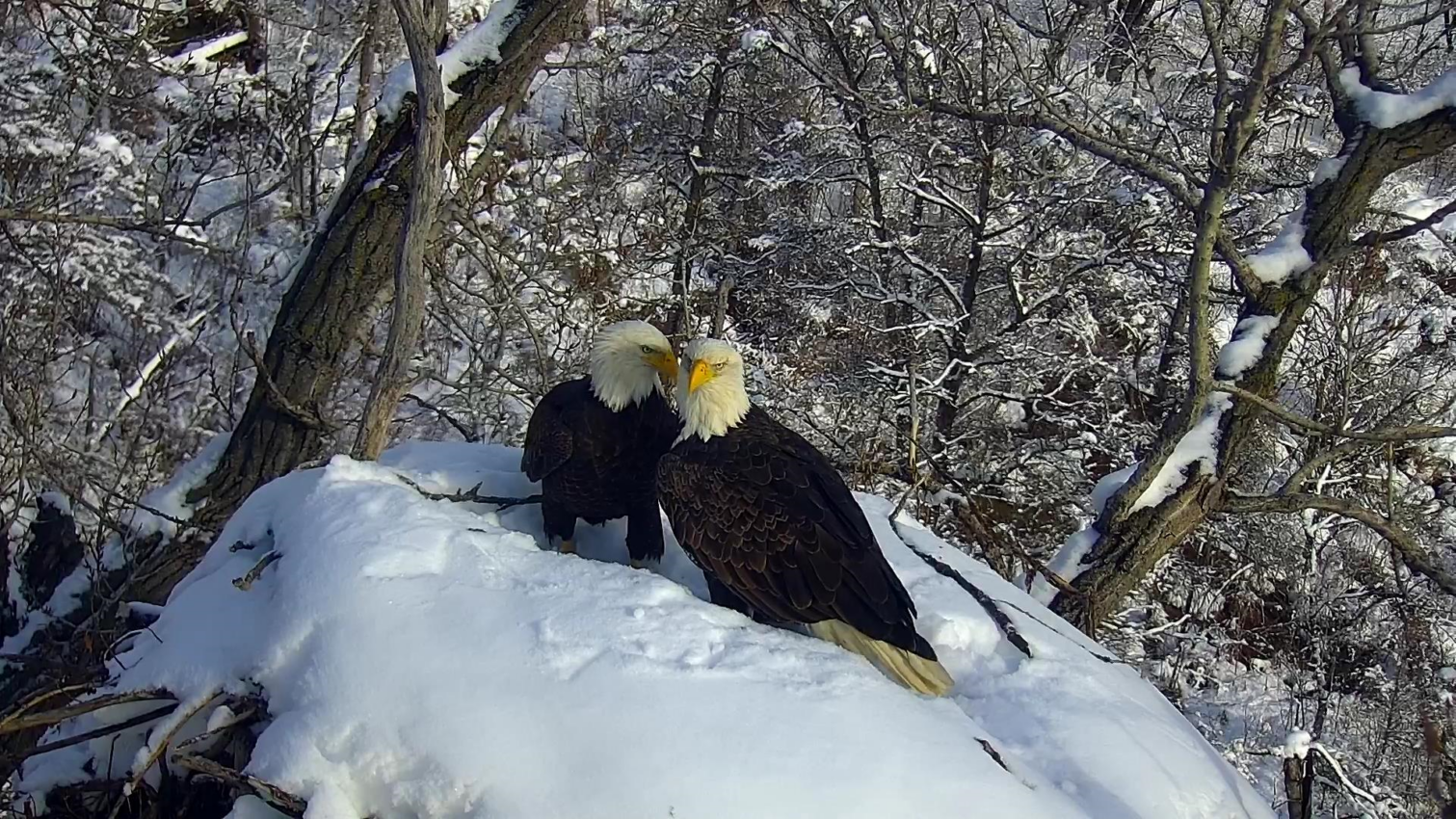
The Minnesota Department of Natural Resources (MN DNR) launched the current season of their annual EagleCam on Dec. 2. Each year a live feed is maintained through the winter to document a mating pair returning to their nest, preparing it for the season, and hopefully, hatching and rearing eaglets.
Elizabeth Nault-Maurer is a Communication Specialist for the MN DNR Nongame Wildlife Program. She told WTIP that Minnesota is home to a variety of raptor species, and that the winter is a busy season for the state’s bald eagle nesting pairs. While most birds in the region wait until spring to lay and incubate eggs, Nault-Maurer explained that for eagles, nesting during the harsh midwest winter is key.
She said that eagles have an easier time keeping their eggs warm than they do keeping them cool enough for proper incubation. Eaglets take several months between hatching, usually in March, and fledging, usually in June. Nault-Maurer said that in order for them to be ready to hunt and fish the open waters in the late spring and early summer, incubation and hatching has to happen during the harsh winter months.
Conservation efforts and population recovery
The state’s population has made an astounding recovery over the past few decades. Nault-Maurer said that prior to the launch of the Nongame Wildlife Program in 1977, the species was endangered, with the DNR only aware of a few dozen active nests in the state. She said the MN DNR partnered with several other organizations, including the University of Minnesota, the Raptor Center, and the National Eagle Center to come up with a conservation plan. She added that it was a true team effort, saying, “It’s never just one organization that does it all. It’s always a lot of people coming together.”
In order to pay for executing the conservation plan, the Nongame Wildlife Fund tax check-off was created in 1980, allowing Minnesotans to make a contribution to the effort when they filed their taxes.
Nault-Maurer credits the state’s efforts to organize a conservation plan, and the strong support it received from the state’s residents for region’s eagle population recovery. “Our restoration efforts were so successful that we were even able to bring bald eagle chicks to other states,” she said. “None of that would have been possible without Minnesotans coming together and saying, ‘No, we love bald eagles. They’re supposed to be here. We want to do what we can to help bring this iconic and beloved species back to Minnesota.'”
Other conservation efforts
While the eagle population has rebounded, there are other species in the state that the DNR has turned its attention to. Every ten years they update the Minnesota Wildlife Action Plan, and identify the Species of Greatest Conservation Need. The plan was updated earlier this year, and Nault-Maurer said that the list currently includes common terns in the Duluth Lake Superior Harbor, the four-toed salamander and American Goshawk in the forests of northern Minnesota, wood and Blandings turtles across the state. They are also working on prairie habitat restoration in southern Minnesota.
Nault-Naurer added that at this point, the list of species the DNR is monitoring for conservation has grown to over 500.
WTIP’s Kirsten Wisniewski spoke with Elizabeth Nault-Maurer of the Minnesota Department of Natural Resources Nongame Wildlife Program. Audio from that interview can be found below.
Kirsten Wisniewski December 5, 2025