Breweries, liquor stores, and retailers navigate uncertain future of selling hemp products
The future of hemp-derived THC products sold at breweries, liquor stores, and other businesses remains uncertain after Congress approved a bill earlier this fall that would cap the amount of THC allowed in products.
The new legislation, which limits the amount of THC in products to 0.4 milligrams, was included in a bill that ended the federal government shutdown in November.
Over the past two months, businesses across the U.S., including Minnesota’s Fulton Brewing, have been grappling with how the bill will impact their short-term and long-term operations. The legislation will go into effect on November 12, 2026.
Hemp-based THC products were legalized in Minnesota in 2022, and opened the door for breweries and businesses to capitalize on another revenue stream.
In the past three years, Ryan Petz, co-owner of Fulton Brewing, said THC products have grown to account for nearly half of the brewery’s sales.
Although the legislation won’t take effect for another 10 months, the owners of Fulton Brewing are already facing tough decisions about the future of their business if the law remains unchanged.
“It’s really hard to do when you’re looking at a scenario of half of your business might be gone in less than 12 months,” Petz said.
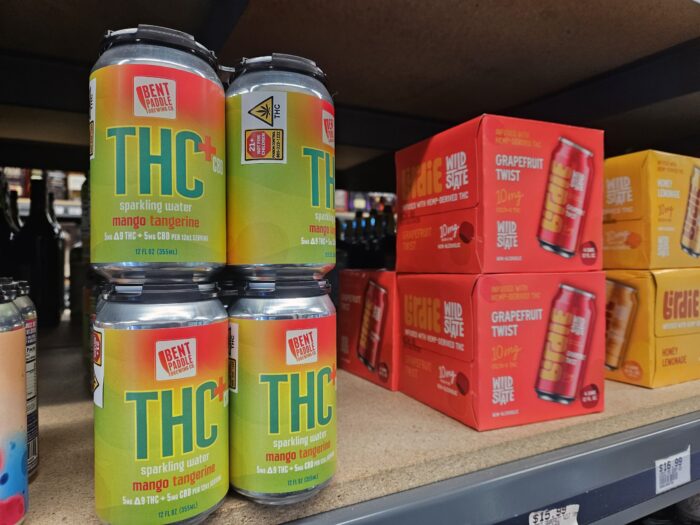
Fulton Brewing sells THC drinks that contain between 3 milligrams and 10 milligrams per product. Petz said the new legislation to limit THC to 0.4 milligrams is not feasible for businesses to produce and still have demand from customers.
“With the constraints they put on it, there’s no real way to run a business,” Petz said. “If nothing changes, it will wipe out the hemp industry. Period.”

Fulton Brewing THC beverages | Photo by Kalli Hawkins
Fulton Brewing is one of many businesses across the state and the U.S. navigating the new legislation.
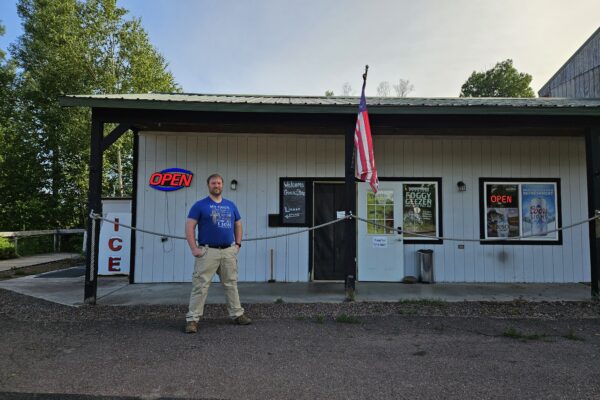
In Lutsen, Clearview General Store owner Chris Homyak is also keeping a close eye on the changes to the THC industry expected to take effect later this year.
Clearview has sold THC beverages and edibles for the past two years. Homyak said more recently that the business was approved by the state for a low-dose hemp edible retailer license.
“If we were unable to sell these items, it would be a loss of anywhere from $45,000-60,000 in revenue per year,” Homyak said. “It would not be the biggest hit to revenue, but it would definitely have an impact on our business.”
In the past few years, Homyak said he has noticed a decline in liquor and tobacco sales and an increasing trend from consumers for THC products.
“A lot of the breweries in the state have transitioned and are making THC beverages and edibles. It has really helped to keep those companies growing and prospering,” Homyak said. “To lose that stream of revenue would be a disaster for most of them as they would have to lay off staff and downsize their businesses.”
Since the legislation was passed in November, brewery owners, hemp producers, and state legislators have held several press conferences to advocate for change to the recently enacted federal limits on hemp.
“A one-size fits all approach to hemp regulation doesn’t work for states like Minnesota that already have strong safety standards in place,” said U.S. Senator Amy Klobuchar in a Dec. 30 press conference.
The Dec. 30 press conference, held at Wild State Cider in Duluth, included comments from Ryan Kopperud, vice president of Growth for Birdie at Wild State Cider, and Adam Ruhland, CEO of Wild State Cider.
“What’s at stake here is not just one business. Not just one taproom. It’s manufacturers, distributors, retailers, farmers, labs—the entire system behind these hemp products people already trust,” said Kopperud.
Earlier in November, Klobuchar spoke at a press conference alongside other business owners to advocate for legislative change. The speakers included Kopperud, Angela Dawson with 40-acre Co-op, an organization that grows hemp, Fulton Brewing owner Petz, and several others.
Petz said the message he wanted to convey during the press conference was to request “sensible regulations so that the industry can continue to thrive.”
The Minnesota hemp-derived THC industry is estimated at $200 million annually, creating jobs and generating money in state taxes.
Petz said the implications of the legislation will have a significant impact on larger companies that produce hemp-derived THC beverages and edibles, but that the issue also “matters to a local level.”
Fulton Brewing distributes its products to various Cook County businesses, such as the Lady Superior NA Bottle Shop and the Grand Marais Municipal Liquor Store.
Grand Marais City Administrator Mike Roth said the THC industry is a “growing market that we clearly have customers for.”
The Grand Marais Liquor Store has seen annual revenue increase, with $89,368 in low-potency hemp edible sales generated between January and November 2025. While it’s nowhere near the sales generated by alcohol during the same period, trends show increasing customer demand for THC products.
As the deadline for the new legislation draws near, Grand Marais Mayor Tracy Benson said, given the ongoing lobbying for changes to the legislation, “I think this is more of a wait-and-see for us locally.”
If the legislation doesn’t change before November 2026, businesses and liquor stores will have to stop ordering THC products above the 0.4 milligram limit to prevent excess inventory and remove or sell products when the law takes effect.
“There are so many implications of how you do things today based on that clock that is ticking down day by day,” Petz said.
WTIP’s Kalli Hawkins spoke with Ryan Petz, co-owner of Fulton Brewing, about the new legislation to limit the amount of hemp-derived THC in products and the impact it would have on his business and the industry. The audio from the interview is below.
Kalli Hawkins January 11, 2026