Cook County businesses share economic impacts from BWCAW closures and wildfire smoke
The summer season is a critical time for many seasonal businesses in Cook County, providing much of the revenue they rely on throughout the year. But instead of welcoming visitors, many business owners have spent the past several weeks managing cancellations as Boundary Waters Canoe Area Wilderness closures, evacuation alerts and wildfire smoke have disrupted travel plans across the region and created economic impacts for businesses.
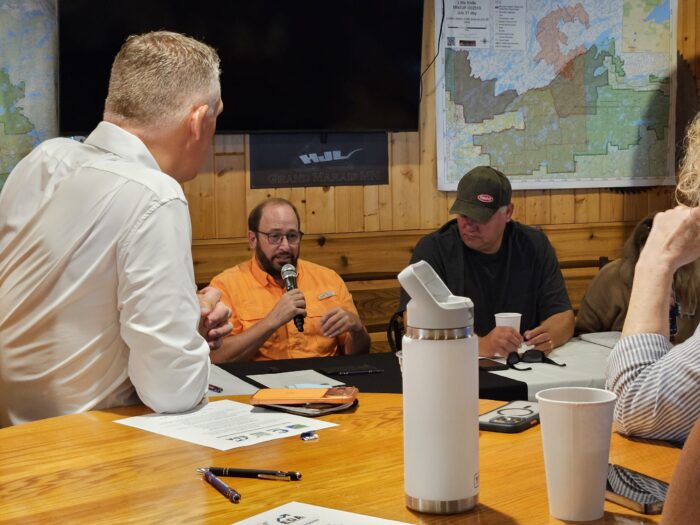
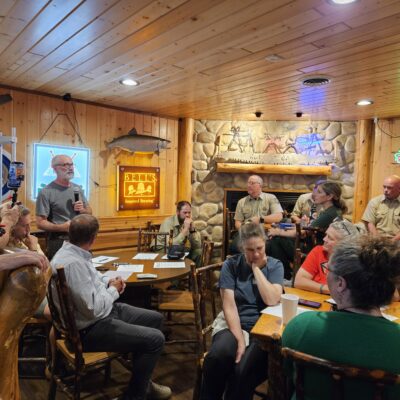
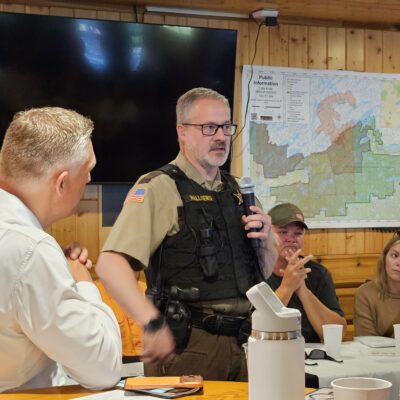
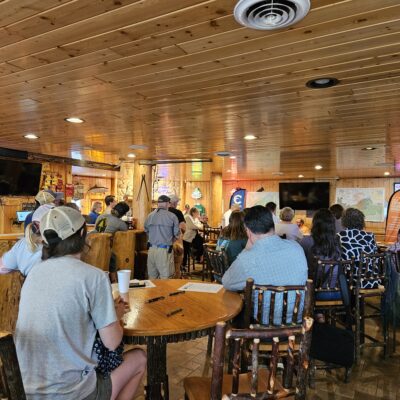
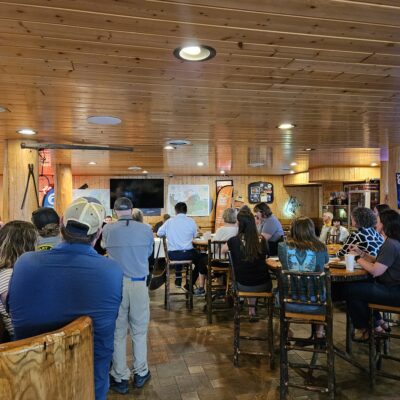
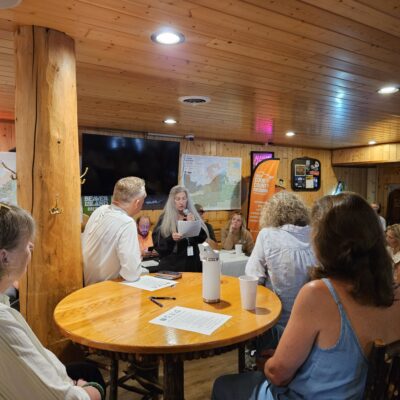
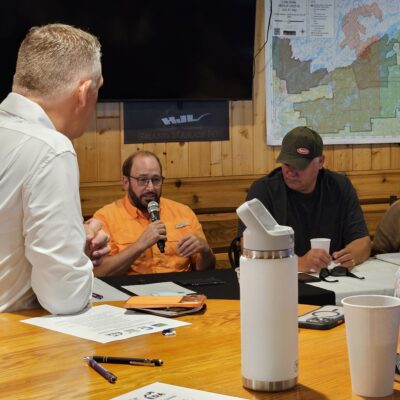
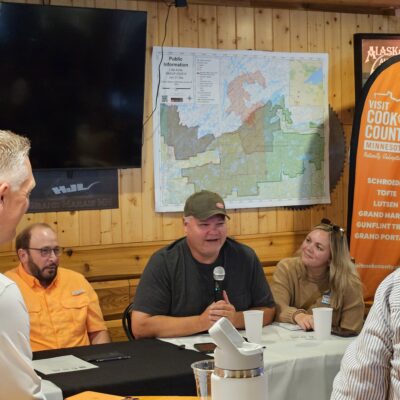
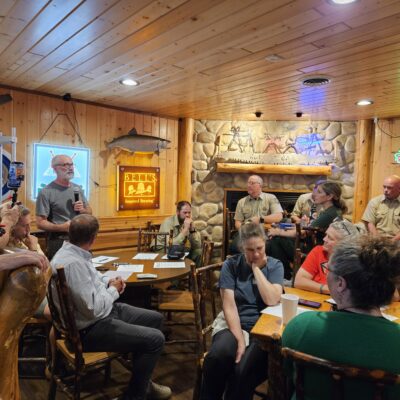
Those challenges brought lodge owners, outfitters and other business operators together Friday with state and local officials for a roundtable discussion on the economic impacts of the BWCAW closures and the Little Knife Fire. Business owners from along the Gunflint Trail, the Sawbill Trail, and in Grand Marais shared their experiences and how cancellations and uncertainty have affected their operations.
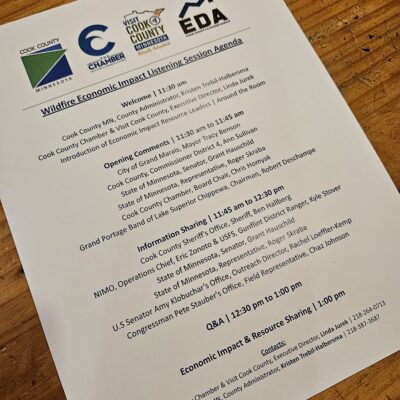
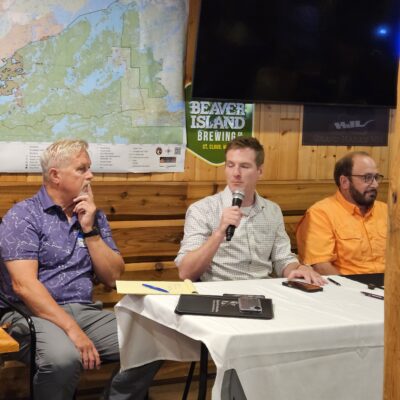
The meeting at Hungry Jack Lodge on the Gunflint Trail was organized by Cook County and the Cook County Chamber of Commerce. The panel included Sen. Grant Hauschild, Rep. Roger Skraba, representatives from U.S. Sen. Amy Klobuchar’s office and Congressman Pete Stauber’s office, Cook County Commissioner District 4 Ann Sullivan, and Grand Portage Band of Lake Superior Chippewa Robert Deschampe, among others who provided opening comments.
Several business owners who spoke during the 90-minute meeting described similar experiences, saying the financial impacts of the past few weeks have gone beyond the BWCAW closures themselves. They said confusion about wildfire smoke conditions, evacuation alerts and public messaging regarding the wildfires led to canceled trips and reservations that have extended into the fall season.
“I took a reservation cancellation yesterday from a very nice man who was not coming because he was uncertain as to whether it would be safe to come back here,” Dave Seaton, owner of Hungry Jack Outfitters, said.
Several other Gunflint Trail outfitter and lodge businesses, such as Golden Eagle Lodge and Nor’wester Lodge, shared similar experiences, citing confusion about the media’s portrayal of wildfire smoke conditions and the duration of the BWCAW closures.
“Part of our recovery is going to be public perception,” said Luana Brandt, owner of Nor’wester Lodge and Outfitters.
On the western edge of Cook County, Claire and Dan Shirley, owners of Sawbill Canoe Outfitters, said the past few weeks have had a significant financial impact on their business.
“Compared to the same period of 2025, our business was down 75%,” Dan Shirley said. With capped BWCAW permits available, and a business that relies solely on getting visitors into the BWCAW, he said, “That’s not something that can be recouped.”
Other businesses, such as Hungry Jack Lodge, shared that business has been down roughly 40% compared to last year. Farther up the Gunflint Trail, at Birchwood Wilderness Camp, owner Ashley Bredemus said the business, which operates a boys camp, had to close and evacuate at the beginning of what was a two-week session.
“So to lose a two-week session, our busiest two-week session of the summer, represents almost a quarter of a million dollars lost if everybody wants a refund,” Bredemus said.
State Sen. Grant Hauschild said hearing directly from business owners helps lawmakers better understand the scope of the economic impacts.
Hauschild said the information shared by business owners will be important in determining what support may be available moving forward.
The Cook County Chamber of Commerce, in coordination with county officials, is actively gathering data from impacted business owners to compile and share with state legislators.
“The gathering of that data and information is going to be so important because that’s going to let us tell the story to then advocate for the support that we need,” Hauschild said.
Skraba said securing state support will require bipartisan cooperation and continued advocacy at the Capitol. While he said he and Hauschild are committed to advocating for Cook County, the road ahead may be challenging.
“Just know it’s not as easy as you think it is,” Skraba said. “There’s a lot of work to get what we want to get done.”
Cook County Administrator Kristen Trebil-Halbersma and Cook County Chamber of Commerce Linda Jurek, who facilitated the roundtable discussion, encouraged businesses to continue tracking financial losses and maintain communication with county officials as the season continues.
Representatives from the Small Business Development Center, Entrepreneur Fund, Northland Foundation, and Iron Range Resources and Rehabilitation, and other organizations also attended the meeting and shared resources, including financial counseling, technical assistance, and loans available to businesses navigating wildfire-related economic challenges.
While no immediate financial relief was announced, officials said documenting losses now will strengthen future requests for state or federal assistance should additional programs or a special legislative session occur.
The BWCAW closures began on July 14 following a lightning strike incident a week prior that sparked over a dozen wildfires in the Superior National Forest. The Little Knife Fire also was sparked by a lightning strike, but originated in Canada and then moved down into the U.S. near the end of the Gunflint Trail. Areas of the BWCAW have reopened in a phased system, with additional access and entry points reopened on July 31.
Video and photos of the Roundtable Discussion held on Friday, July 31 at Hungry Jack Lodge are below:
Kalli Hawkins July 31, 2026