Cook County PHHS proposes 10.73% levy increase amid federal funding changes
Cook County Public Health and Human Services eliminated four positions in its proposed 2027 budget presented to the PHHS board. Public Health and Human Services Director Grace Grinager said the positions were not layoffs but had been vacant for an extended period and remained in previous budgets before being eliminated from the 2027 proposal.
Even with those reductions, changes to Medicaid, known in Minnesota as Medical Assistance, the Supplemental Nutrition Assistance Program and additional factors are affecting the cost of providing services, prompting the department to seek a 10.73% levy increase.
According to a presentation at the Aug. 18 PHHS board meeting, federal changes to SNAP funding are expected to increase the county’s contribution by $89,773. The department is also facing increased out-of-home placement costs and uncertainty surrounding state and federal revenue.
With the elimination of positions and other measures, PHHS reduced its proposed expenditures by about 7%, but the department projects a revenue decline of nearly 25%. In 2026, the department generated $3,004,667 in revenue. According to the department, that amount is projected to drop to $2,287,688 in 2027.
“I will say that this is a challenging year for social service providers throughout the 87 counties in Minnesota, and that includes our county,” Grinager told WTIP. “And while that percent increase seems high at first glance, higher than I would like to see it, it is well within range for what we’re seeing in other health and human services departments in our region.”
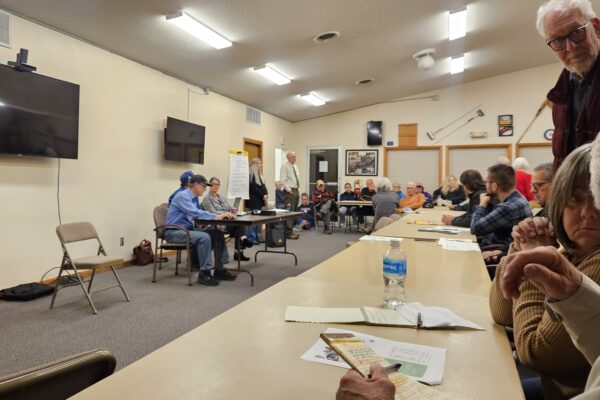
The PHHS board, which includes all five Cook County commissioners, discussed the implications of a double-digit levy increase.
“How much can the taxpayer support?” Commissioner Deb White said during the presentation. “We’re going to have to figure out what our values are because even like in a home in a budget, we need to have all these different things, but we can’t have them all now, perhaps, unless there’s a real change in our revenues.”
White said that as the county develops its overall 2027 budget, she wants commissioners to begin ranking their priorities.
“Doesn’t mean we don’t fund anything,” White said, “but maybe we have to reduce funding. I don’t know. But at some point, those people that do not come in from the outside world with a pension, with retirement funds, even they cannot sustain increased taxes forever.”
Grinager said the budget presented at the meeting reflects the services the department hopes to continue providing in the county.
“I think our role is to, like I said, administer these programs well, operate with transparency, provide information to our board and also to the broader community as to what we’re doing and why and how well things are working,” Grinager told WTIP.
Grinager said some services, including out-of-home placement, are mandated by the state and have become more expensive. Those mandates limit the discretionary cuts available to the county.
“So there are a number of discretionary programs that we run within the county and within PHHS, and I think that distinction of discretionary versus mandatory — it’s important to remember that doesn’t translate to not important versus important,” Grinager said. “There are plenty of important programs that are not mandated. There are plenty of important programs that are.”
PHHS board member Frank Ceo urged the board to consider allocating funding for the Cook County Council on Aging, also known as the Hub, as a line item in the county budget rather than relying on the Public Health Fund grant process.
The organization requested nearly $110,000 through the grant program for 2027, more than two-thirds of the $150,000 available among 14 applicants. The Cook County Council on Aging was awarded $35,000.
White raised the question of how the county prioritizes discretionary funding, comparing the amount awarded to the Council on Aging with the $175,200 allocated in the proposed budget for the Child Care Provider Wage Enhancement Program.
“So we are basically saying that the older population — we don’t value them as much as we do the younger, or we don’t financially value them the same,” White said.
White said funding for young children and their families is vital but questioned whether the county should provide greater support for older residents.
“But we have an older population who has made it through the decades, and they are continuing to be vital members of the community,” White said. “Is it important that we also support the older generations? Values. It goes back to values. Is it important or not?”
Fiscal Supervisor Plamen Dimitrov, who presented the proposed 2027 budget, told White that both the Public Health Fund grants and Child Care Provider Wage Enhancement Program are discretionary spending. He added that many county services provided to older adults are mandated.
“Our home and community-based services team provides a large number of services daily,” Dimitrov said during the board meeting. “You will have to decide what the numbers are going to be. But for other services that we provide to our elderly, there’s a significant amount in the budget already that supports that by staff time providing case management, and we have the In-Home Support Program that supports a large number of our community members. We do subsidize that a little bit.”
Grinager said that the department would present more information about the value of the Childcare Provider Wage Enhancement Program at the October board meeting.
WTIP spoke to Grinager about the budget, the fund balance, rising program costs, and efforts to increase revenue in the department. The audio of that conversation can be found below.
Josh Hinke August 26, 2026