Local, national health officials respond as U.S. loses measles elimination status
The United States has lost its measles elimination status after more than 25 years, international health officials announced Tuesday, as the highly contagious virus continues to spread across the country, largely among unvaccinated populations.
The Pan American Health Organization announced the decision Nov. 17 after determining that measles had circulated continuously in the United States for at least 12 months. The country first achieved measles elimination status in 2000.
The declaration has few immediate practical implications but marks a significant reversal in efforts to control a disease that had largely been contained through widespread vaccination.
The announcement comes as Minnesota is experiencing a measles outbreak, primarily in Todd County, where the Minnesota Department of Health reported 136 cases as of Nov. 12.
Cook County Public Health and Human Services Director Grace Grinager addressed the national announcement during Tuesday’s Public Health and Human Services Board meeting, reassuring commissioners that no cases had been reported locally.
“There are no cases in the county or the region. I want to stress that. But I also want to note that we are in the background, making sure that we maintain situational awareness and know what our role would be if that were to change,” Grinager said.
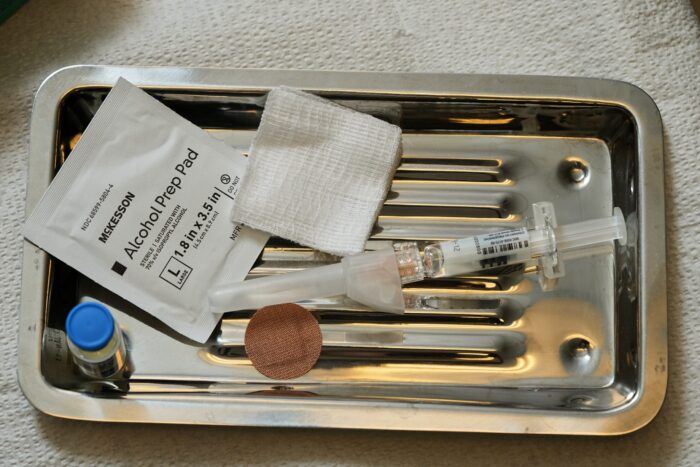
Grinager encouraged unvaccinated residents to speak with their primary care providers about receiving the measles, mumps and rubella (MMR) vaccine.
Measles outbreaks have occurred in the United States since the disease was declared eliminated, but they were typically linked to cases imported from other countries. The elimination designation meant that measles was no longer spreading continuously within the United States.
To determine whether a country maintains that status, health officials examine epidemiological data, reported cases and genetic information from circulating strains of the virus. The review helps establish whether the same chain of transmission has continued for 12 consecutive months.
Dr. Matthew Ferrari of Penn State University explained during a media availability that regaining elimination status would require both stopping continuous transmission and demonstrating improvements in vaccination coverage and disease surveillance.
“We have to maintain at zero for another 12 months. But then we also have to both establish that we’ve made increases in our vaccination coverage. And that we have done a good enough job of looking for the cases,” Ferrari said.
Ferrari identified declining vaccination coverage as the primary reason for the resurgence.
“The primary answer to this is lack of vaccination. Vaccine is the primary, is really the only way to prevent the establishment and continual transmission of measles,” Ferrari said.
According to the Centers for Disease Control and Prevention, 5,412 measles cases had been confirmed nationwide as of Nov. 12, more than double the number reported during all of 2025.
The CDC also reported six measles-associated deaths in 2026, although the agency noted that its figures were subject to change as additional information became available.
Measles typically begins with a high fever, cough, runny nose and red eyes, followed by a rash that usually starts on the face and spreads downward. Although most people recover, the disease can cause serious complications, including pneumonia, blindness and swelling of the brain. Young children and adults over age 30 are at greater risk of severe complications.
In Minnesota, the outbreak in Todd County has disproportionately affected unvaccinated residents. County officials reported three hospitalizations and five emergency room visits as of Nov. 9.
Health officials continue to emphasize vaccination as the most effective way to prevent measles transmission.
Dr. William Moss of Johns Hopkins University also addressed misinformation surrounding the MMR vaccine during a media availability, emphasizing that extensive scientific research has found no connection between the vaccine and autism.
“What I wanna emphasize is that there is tremendous evidence that the measles, mumps, and rubella vaccine does not cause autism,” Moss said. “This is a very common myth spread by disinformation, but there is enormous evidence demonstrating that MMR vaccine does not cause autism.”
The Associated Press contributed to this article.
Josh Hinke November 18, 2026