


Trail Time – Shoulder Season and Celebrating the Alder
Winter is always a quiet time on the Gunflint Trail, and when the shoulder season starts, it gets even quieter. As we creep into April and the temperatures start to drop, snowmobiling trails get mushy and the lakes will start losing inches of ice to the steady warmth of the spring sun. Ski trails last longer due to excellent grooming — I’ve heard from several places that this has been one of the best ski winters yet. And it’s not over.
There’s still a good three feet of now in the woods where I am, but nearer the end of the Trail there is less snow and in town, in the other direction, even less. The snow pack is as variable as the temperatures when the Superior lakeside and the Trail are compared, which is to say that Spring comes earlier in town than up here. It is most obvious right now in the budding of trees and shrubs.
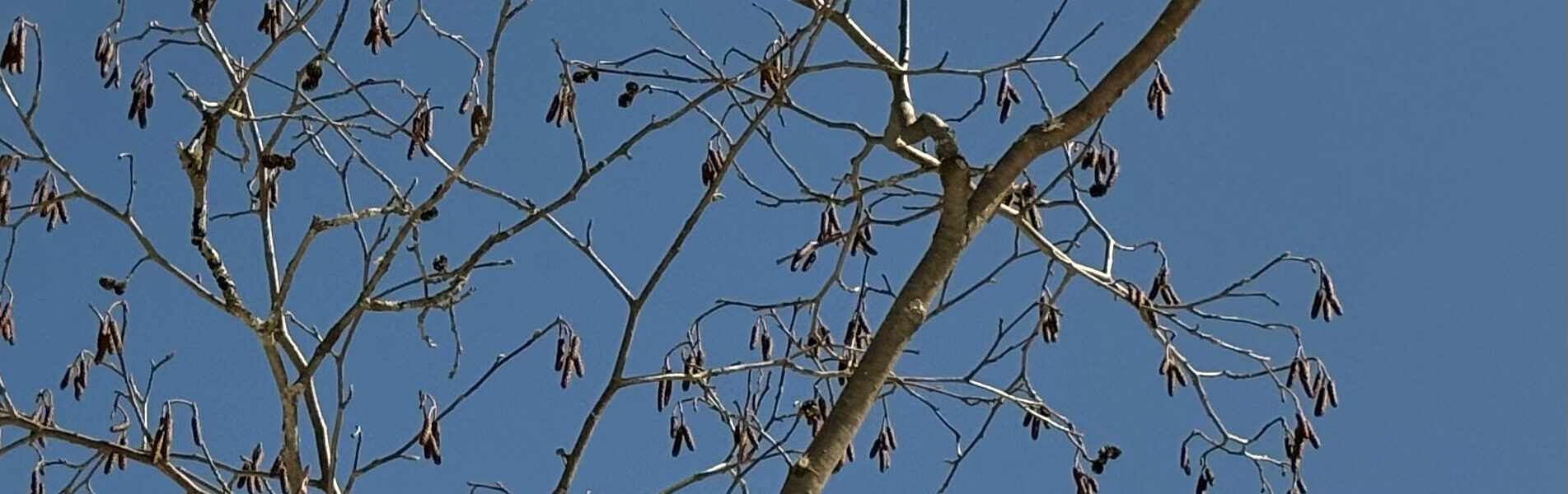
I was noticing the alder shrubs as I drove up the Trail last week. The male catkins were long, hairy and golden and they shone in the late afternoon sun as I drove by the thick alder stands lining the road. Last year’s female catkins still were hanging on to stems. They look like tiny pine cones when they are past maturity. The female catkins are reddish when they are blooming.
Speckled alder is one of those overlooked plants, like willows or hazels. They are quite humble when compared to the stately white pines. Though small, they play an important role in the life of the forest, in fact, they play a crucial role. Alders benefit the soil in which they stand, fixing nitrogen into the soil. Other surrounding species benefit from the alder’s enrichment of the soil and so grow larger fruits and seeds, which feed the migratory species of birds and insects, aiding in their long migrations.
When the alder dies, trees move in, other species who need the nitrogen to grow. Alders are excellent along waterways for erosion control. They are also fire-resistant.
Alders grow all the way around the world in the Boreal landscape. There is a huge array of different species, all formed for the certain niche they will occupy in the life of their respective biomes. They were, and are, an important source of medicine for native and foraging communities. Aspirin is found in alders, taken from the tiny female cones when they are green, before they have opened; and from the outer bark, inner bark, whole root and seasonal stems. In South America, Alder was used for medicinal purposes in the Incan empire.
The alder tree was held in special esteem by ancient Celtic people. In Ireland, black alder was used to carve clogs — wooden footwear to keep northern toes out of the eternal wetness of the British Isles.
Alders are a browse plant for moose, beavers, muskrats and rabbits. They browse the twigs and foliage. Songbirds, like the goldfinch, redpolls, woodcock and grouse eat the seeds, buds and catkins. Beavers use alders in the construction of their dams and lodges. Seedlings of the alder produce a compound that is an abortive agent. Rabbits and hares avoid them and the seedlings can grow up, protected by this chemical adaptation.
Alder wood has long been used for preserving of smoked meats and fish. We have a large jar of alder-smoked salt that we sprinkle over meat and vegetables.
Because of is water-resistance, alder was used in the posts that elevate Venice, the city of water, out of the mud. Thus a humble little shrub takes part in supporting one of the most famous cities in the world.
— Marcia Roepke


