Exploratory drilling near Birch Lake highlights state-federal divide in Boundary Waters
Exploratory drilling near Birch Lake has renewed attention on the differing policies governing state and federal lands in and around the Boundary Waters watershed.
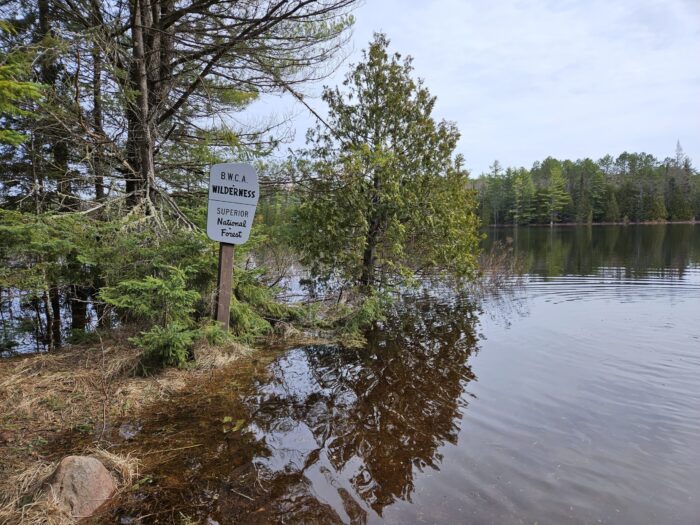
Franconia Metals, a subsidiary of Twin Metals, has submitted plans to the Minnesota Department of Natural Resources to conduct exploratory drilling just outside the Boundary Waters Canoe Area Wilderness. Twin Metals has sought to develop a copper-nickel mine in the Rainy River watershed for more than 15 years.
The future of that proposed mine remains uncertain following the cancellation of federal mineral leases in 2022 and a 20-year mineral withdrawal enacted in January 2023. While the Trump administration has signaled interest in supporting domestic mining projects, no federal action has been taken to reinstate the leases, which remain the subject of ongoing litigation.
Twin Metals retains rights to state mineral leases, including those where the proposed drilling would occur.
“We’re targeting up to 19 different locations. And, you know, the exploration work is really key for a lot of things, but it’s very routine work that we do,” Kathy Graul, Twin Metals director of public affairs, told WTIP. “It’s really important for identifying and mapping out the different characteristics of our mineral deposits.”
The drilling sites are located near the former Dunka Mine and east of Babbitt, close to the active Northshore Mining taconite operation.
“We apply really stringent requirements across the board, including sound dampening on our rigs,” she said. “We use best management practices in all of our drilling programs.”
“We apply really stringent requirements across the board, including, you know, sound dampening on our rigs,” Graul said. “We use best management practices in all of our drilling programs, not just this one, but in all of them.”
Sound and light impacts are among the primary considerations during exploratory drilling, according to industry representatives.
“What Twin [Metals] has done in the past, and what other companies have done is they have sound-absorbing walls that they will put up around a drill rig,” Julie Lucas of Mining Minnesota told WTIP. “For lights, a lot of it is the stuff you would see for the Dark Skies Initiative, where you have, you know, the capping on the light so that light is directed down.”
The Boundary Waters and its surrounding watershed include a patchwork of state, federal and private lands. Although Twin Metals’ long-standing mine proposal has relied on access to both state and federal minerals, the current drilling is focused on state leases and could inform potential development of smaller deposits.
“While right now we have a federal ban on copper mining on federal lands and minerals in the watershed, that is not the case for state lands, and so they can continue doing drilling,” Executive Director of Save the Boundary Waters, Ingrid Lyons, told WTIP. “But because we still allow copper mining development on state lands in the watershed, the company can continue to move forward.”
During the 2025 legislative session, state Sen. Steve Cwodzinski and state Rep. Alex Falconer introduced the Boundary Waters Permanent Protection Bill. The proposal drew several co-authors, including St. Paul mayor-elect Kaohly Vang Her, but did not receive a vote in either chamber.
State Rep. Roger Skraba and Sen. Grant Hauschild have said they do not support a ban on copper-nickel mining, a position Hauschild reiterated during town halls across his district earlier this year. In November 2024, both lawmakers sent a letter to then-President-elect Donald Trump urging him to reverse the 2023 mineral withdrawal.
Hauschild has said mining proposals should be evaluated at the state level rather than determined by federal administrations.
“We have the right to do exploration activity on our state and private minerals,” Graul told WTIP. “That’s just a very kind of fundamental concept, and like I mentioned, it’s a really important step in understanding all of the resources that we have in the state.”
Lyons said options for responding to the current drilling plan are limited.
“There is not a ton that we can do in response to these exploratory drilling plans,” Lyons said. “This is a continuation of exploratory drilling that’s been happening in this area, and we feel it’s an important opportunity to raise the concerns that we have, not only about the impact of the drilling itself, but what the impact would be on the watershed were this type of mining to be allowed to proceed.”
Josh Hinke December 12, 2025