Grand Portage restores lake sturgeon to Pigeon River
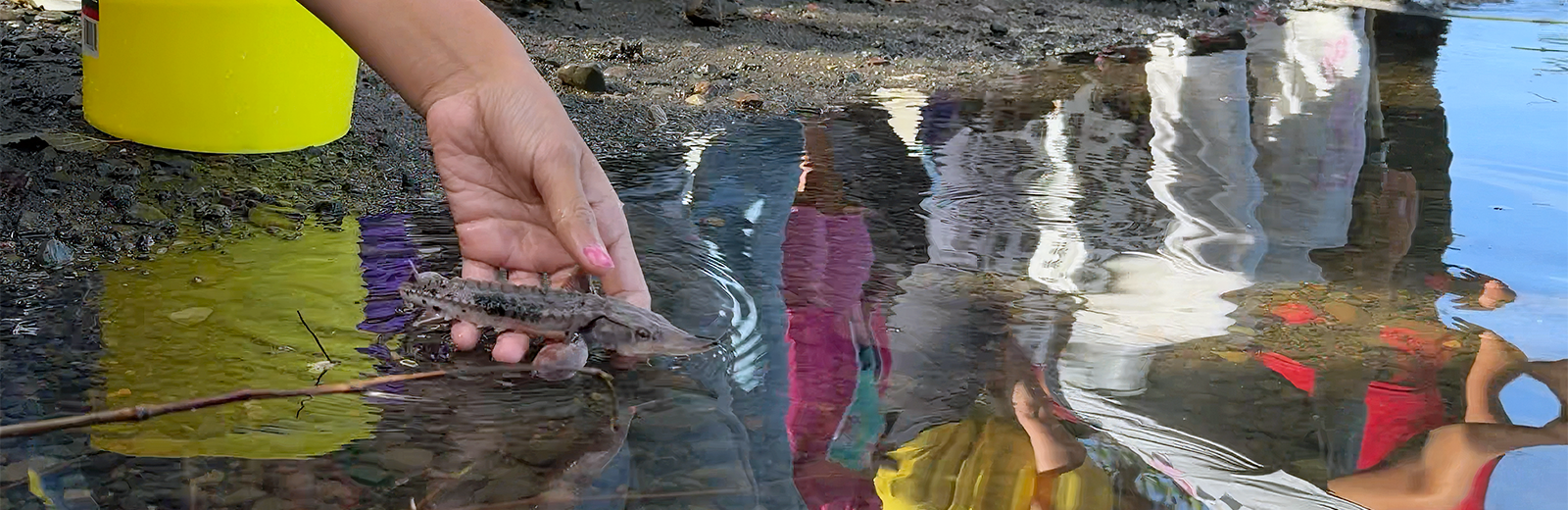
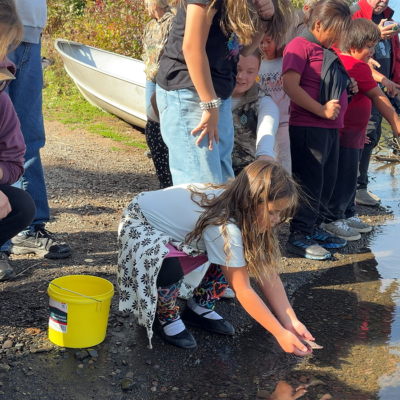
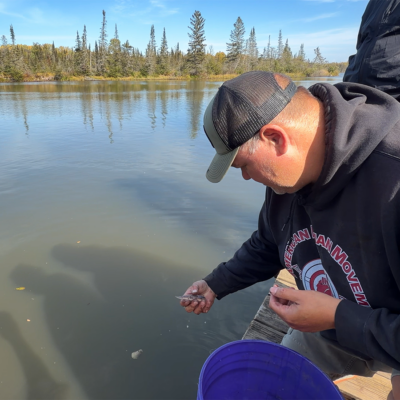
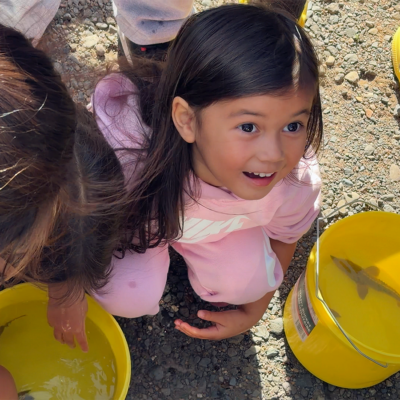
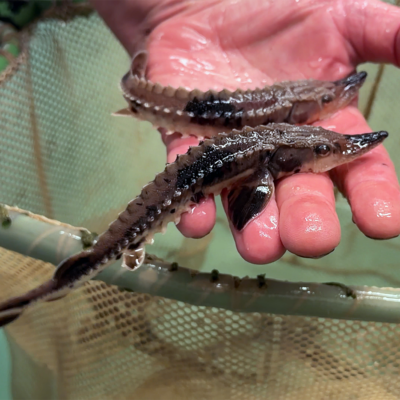
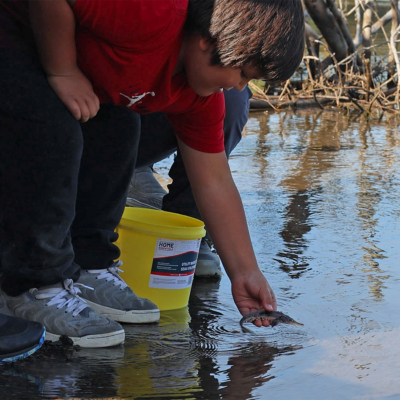
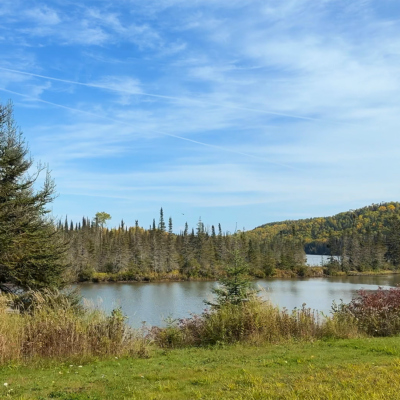
On a beautiful fall day in Grand Portage, students from Oshki Ogimaag Community School gathered along the Pigeon River to release young lake sturgeon into the water. The fish, about 7 inches long, are part of a longer story — one that stretches back centuries and potentially forward for generations.
“This will be the very first time that we have stocked lake sturgeon in Pigeon River in history, and so this is a pretty exciting day,” said Seth Moore, Director of Natural Resources for the Grand Portage Band of Lake Superior Chippewa.

Seth Moore, director of natural resources for Grand Portage Band of Lake Superior Chippewa
“Lake sturgeon historically occupied Pigeon River, and there are some historic accounts that they were so dense in the river that Indigenous people could walk across them during their spawning runs.”
Moore said Grand Portage began surveying for lake sturgeon in 2005, finding only occasional fish and no evidence of a reproducing population.
The species declined dramatically following European settlement, when overharvesting and the logging industry took a heavy toll.
“The timber industry really decimated the forests and caused a lot of siltation in the watersheds,” Moore said. “A lot of the reproductive habitat, which is rocks and boulders and cobbles, became buried by sediments in many of our rivers.”
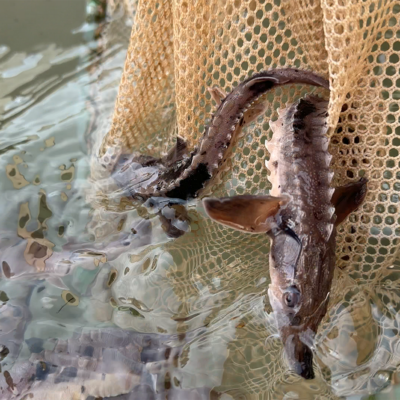
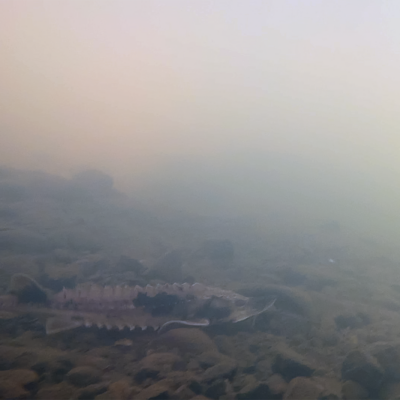
Lake sturgeon are an ancient species, dating back to the age of dinosaurs. Young sturgeon can become prey for northern pike and walleye, but they have bony protective plates called scutes.
“It’s almost like armor plating on those little baby fish,” said Grand Portage fisheries biologist Ryan Grow. “And then as they grow, suddenly they’re protected by their size, not by their armor anymore.”
Sturgeon can grow to more than six feet long, and can live for a century or even longer. But their slow development presents a challenge for restoration efforts. Males don’t typically reproduce until around age 15, while females may take 25 years.
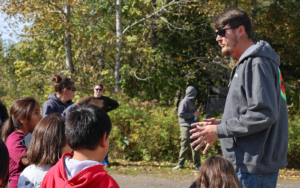
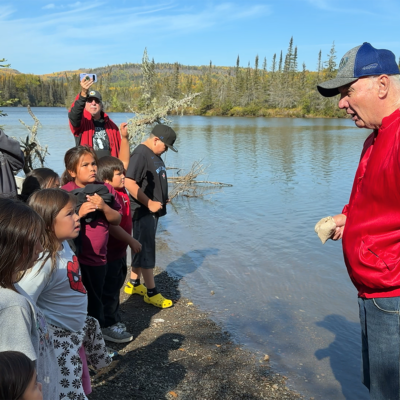
Grand Portage fisheries biologist Ryan Grow talks to students
“So even if we stock these sturgeon 15 years in a row, we will not see any natural reproduction for at least 15 or 20 years,” Moore said. “So this is a long-term investment, very similar to planting forests.”
The young sturgeon were gifted to Grand Portage through a partnership with the Fond du Lac Band of Lake Superior Chippewa, which has been restoring sturgeon populations in the St. Louis River for decades. The transfer of sturgeon fingerlings took place on September 30, commemorating the signing of the 1854 Treaty of La Pointe.
“It was really just a great partnership of tribes reaching out to each other, collaborating and working together to further this important native species,” Grow said.
The fish also carry tiny identification tags that will allow researchers to recognize them if captured during future surveys. Some have had fin samples collected for genetic research that could eventually help identify their offspring.

Grand Portage tribal elder Billy Blackwell
For Grand Portage, the restoration effort reflects the Anishinaabe principle of planning for seven generations.
“We have a responsibility to leave the world in a manner that our great grandchildren can use it,” Moore said. “So these kids will stock these fish. Sturgeon live to 100 or 150 years old. Their great grandchildren might be able to see the products of these fish as they begin to reproduce and restore themselves into this river system.”
During the release ceremony, tribal elder Billy Blackwell spoke about the sturgeon’s significance to the Ojibwe people, including its place among the fish clans. He offered tobacco, or asemaa, to the water.
“I’m bringing asemaa to the waters, introducing back into these waters the Gitche Name, the sturgeon,” Blackwell said. “We’re just putting in the little babies. So the sturgeon are going back.”
Listen to the full radio story and view more photos below.
Chuck Olsen October 11, 2026