U.S.-Canada trade tensions could put pressure on northern Minnesota economy
The escalating trade dispute between the United States and Canada could have ripple effects across northern Minnesota, where businesses, industries, and communities are closely tied to the Canadian economy.
The latest round of tariffs follows the deterioration of trade negotiations between the two countries. The Trump administration recently imposed 50% tariffs on about $20 billion worth of Canadian goods, while Canada announced retaliatory tariffs on more than 700 U.S. products, including steel, dairy products, farm equipment, pulp and paper, electronics and other consumer goods. The Canadian tariffs are scheduled to take effect Sept. 8.
Canada was Minnesota’s top destination for exports last year, with the state sending $5.6 billion worth of products across the border in 2025.
Monica Haynes, director of the Bureau of Business and Economic Research at the University of Minnesota Duluth, said the relationship between Minnesota and Canada is more interconnected than many people may realize.
“Minnesota’s largest trade partner is Canada,” Haynes said. “There are a lot of businesses that have supply chains that are interconnected.”
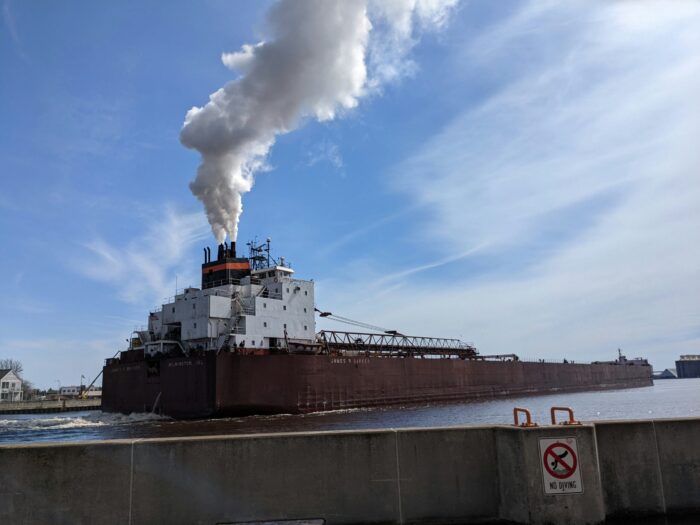
The Port of Duluth-Superior is a major hub for trade between Minnesota and Canada, as well as for shipments moving throughout the U.S. and international markets.
Minnesota transports about 20 million tons of iron ore each shipping season across the Great Lakes, according to the Duluth Port Authority. The port also handles commodities including coal, limestone, grain, fertilizer, and heavy equipment.
“So all of these commodities are moving back and forth,” Haynes said. “And I think as these tariffs are put into place, we will likely see a decline in some of that activity.”
The impact of the tariffs will first begin with businesses and importers, then trickle down to reach consumers.
Haynes said businesses facing higher costs on imported goods may look for alternative suppliers, but established supply chains can make that difficult. And with uncertainty over how long tariffs will remain in place, businesses may be reluctant to completely restructure their operations.
Instead, some businesses may pass higher costs on to consumers through increased prices. That could add to inflationary pressures that consumers have already experienced in recent years, Haynes said.
“I think consumers have been a little bit protected from inflation from tariffs up until this point because most countries have not retaliated to that same level, but this is going to be a real test,” Haynes said. “With one of our largest trade partners having these retaliatory tariffs in place is going to really stress those prices for American consumers.”
Uncertainty about how long negotiations and tariffs will last could also affect business investment and hiring.
Businesses unsure what economic conditions will look like several months from now may choose to hold off on expansion, hiring, or other long-term investments.
“The most likely response to that is to kind of just hold steady. Don’t make changes,” Haynes said.
The economic relationship between Minnesota and Canada extends beyond importing and exporting goods. Haynes said Canadian businesses also have a presence in northeastern Minnesota through foreign investment, employing local workers and working with local suppliers.
Canadian visitors are also an important part of the economy in communities like Grand Marais along the North Shore.
For communities that rely on cross-border tourism, that could translate into fewer visitors and less spending at local businesses. In 2025, amid U.S.-Canada tariff and trade negotiations, businesses near the U.S.-Canada border, such as Ryden’s Border Store and the Grand Portage Lodge & Casino, were affected and saw fewer Canadian visitors.
Haynes said several indicators will help determine whether the tariffs create a temporary disruption or a longer-term shift in the regional economy.
“The monthly inflation numbers are going to be really telling after these tariffs have been put in place for a little while to see if they really have an impact,” Haynes said.
Another indicator Haynes and her team at the Bureau of Business and Economic Research will watch is monthly export shipping totals from the Duluth Port Authority to assess economic impacts. Lastly, they will watch economic impacts on businesses and consumer confidence.
For northern Minnesota, Haynes said, the coming months could provide a clearer picture of how an increasingly strained U.S.-Canada relationship affects an economy built on decades of cross-border trade, tourism and investment.
WTIP’s Kalli Hawkins spoke with Monica Haynes, director of the Bureau of Business and Economic Research at the University of Minnesota Duluth, about the economic relationship between Minnesota, the Twin Ports, and Canada and how the tariffs may impact the region. Audio below.
Kalli Hawkins August 31, 2026