Resolution introduced to reverse Boundary Waters mineral withdrawal
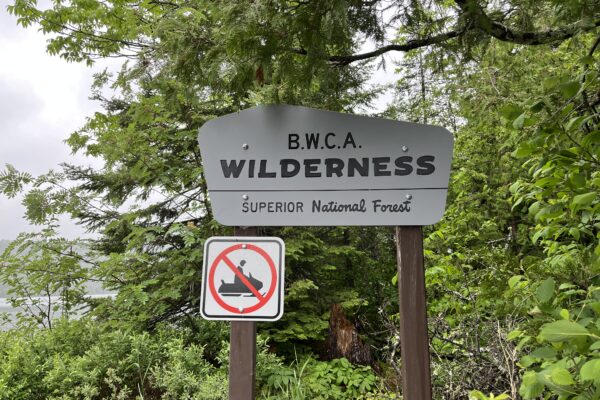
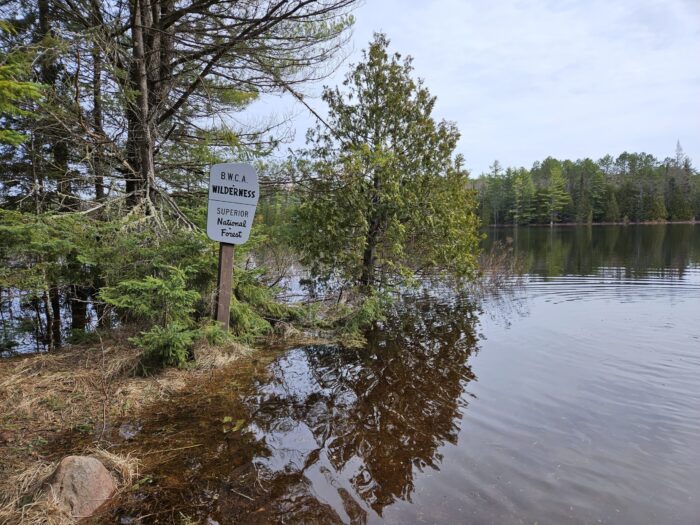
U.S. Rep. Pete Stauber on Monday introduced a joint resolution aimed at overturning a federal mineral withdrawal affecting lands in northeastern Minnesota.
Stauber, a Republican from Minnesota’s 8th District, introduced Joint House Resolution 140 on Jan. 11. The resolution would undo Public Land Order 7917, which withdrew federal lands in Cook, Lake and St. Louis counties from mineral leasing.
The resolution relies on the Congressional Review Act, a law that allows Congress to overturn certain federal agency actions. The CRA has not previously been used to reverse public land orders, which are typically governed by the Federal Land Policy and Management Act (FLPMA).
“In a typical process, the Congressional Review Act starts with the Government Accountability Office or GAO,” Ingrid Lyons, executive director of Save the Boundary Waters, told WTIP. “And GAO has a long history and practice of issuing law-based decisions meant to guide Congress as to whether or not a rule or an action by an agency is subject to scrutiny under the CRA that was a step that was completely skipped in this instance.”
Stauber has previously sought to overturn the 2023 mineral withdrawal. Last year, he reintroduced the Superior National Forest Restoration Act, which included language to reverse the withdrawal. Similar language was later included in a Republican budget package known as the “One Big Beautiful Bill,” but was removed by the Senate parliamentarian before final passage.
Joint House Resolution 140 may represent the strongest opportunity yet for Stauber and House Republicans to undo the withdrawal.
The Congressional Review Act provides an expedited process that allows Congress to pass a resolution with a simple majority and avoid a Senate filibuster. If approved, the act also prevents the agency from issuing another rule that is “substantially the same” unless Congress authorizes it through new legislation.
“The numbers are what they are, but we’re going to do everything in our power to fight back and try to win this vote,” Lyons said. “It sets an extraordinarily dangerous precedent for public land management across the country, as well as unjustly opening the watershed of the Boundary Waters back up to copper mining.”
If the resolution passes the House, it would move to the Senate and then to President Donald Trump for signature. Republicans currently hold a five-seat majority in the House and a four-seat majority in the Senate, where ties would be broken by Vice President JD Vance.
If signed into law, the resolution would likely lead to the renewal of federal mineral leases held by Twin Metals Minnesota, a subsidiary of the Chilean mining company Antofagasta, potentially clearing a path for mining development near Birch Lake.
“It doesn’t mean there’s going to be shovels in the ground tomorrow,” Lyons said. “There are still going to be opportunities for folks to stand up and fight back and defend the Boundary Waters. It’s just going to keep looking different. So we ask that people just remain attentive.”
Despite the 2023 mineral withdrawal, Twin Metals has continued exploratory drilling on state and private land leases, including activity as recently as December.
WTIP reached out to Twin Metals for comment on the resolution and received the following statement:
“Twin Metals Minnesota is very appreciative of Congress for their efforts to overturn an unnecessary and detrimental action that locked out a significant domestic source of critical minerals, which are needed now more than ever to accomplish our shared goals of energy security, creating good paying jobs and strengthening our nation’s supply chains. Minnesota is fortunate to have both world-class mineral deposits and a stringent regulatory framework that ensures mining projects are held to the highest environmental and labor standards.”
“Twin Metals Minnesota is very appreciative of Congress for their efforts to overturn an unnecessary and detrimental action that locked out a significant domestic source of critical minerals needed to strengthen our nation’s supply chains, create good-paying jobs and advance energy security,” the company said. “Minnesota is fortunate to have world-class mineral resources and a stringent regulatory framework that ensures projects meet the highest environmental and labor standards.”
The company said it remains committed to “responsible development” that benefits Minnesota communities.
A vote on Joint House Resolution 140 is expected Wednesday or Thursday next week.
In a separate statement, Mining Minnesota, an industry group advocating for mining development, said it supports Congress’ use of the Congressional Review Act.
“We welcome Congress’s use of the CRA to remove unnecessary barriers and allow potential projects in northeast Minnesota to advance under rigorous, transparent review,” the organization said. “Developing these resources in Minnesota means applying best-in-class engineering, continuous water-quality monitoring, modern reclamation processes and enforceable state and federal oversight.”
WTIP contacted Stauber’s office for comment on the resolution. No response was received before publication.
WTIP spoke to Ingrid Lyons of Save the Boundary Waters. The audio of that conversation can be found below:
Josh Hinke January 18, 2026