Experts put July lightning fires in historical context
Experts continue to study the July lightning fires to better understand their historical context and what they could mean for how communities prepare for future wildfires.
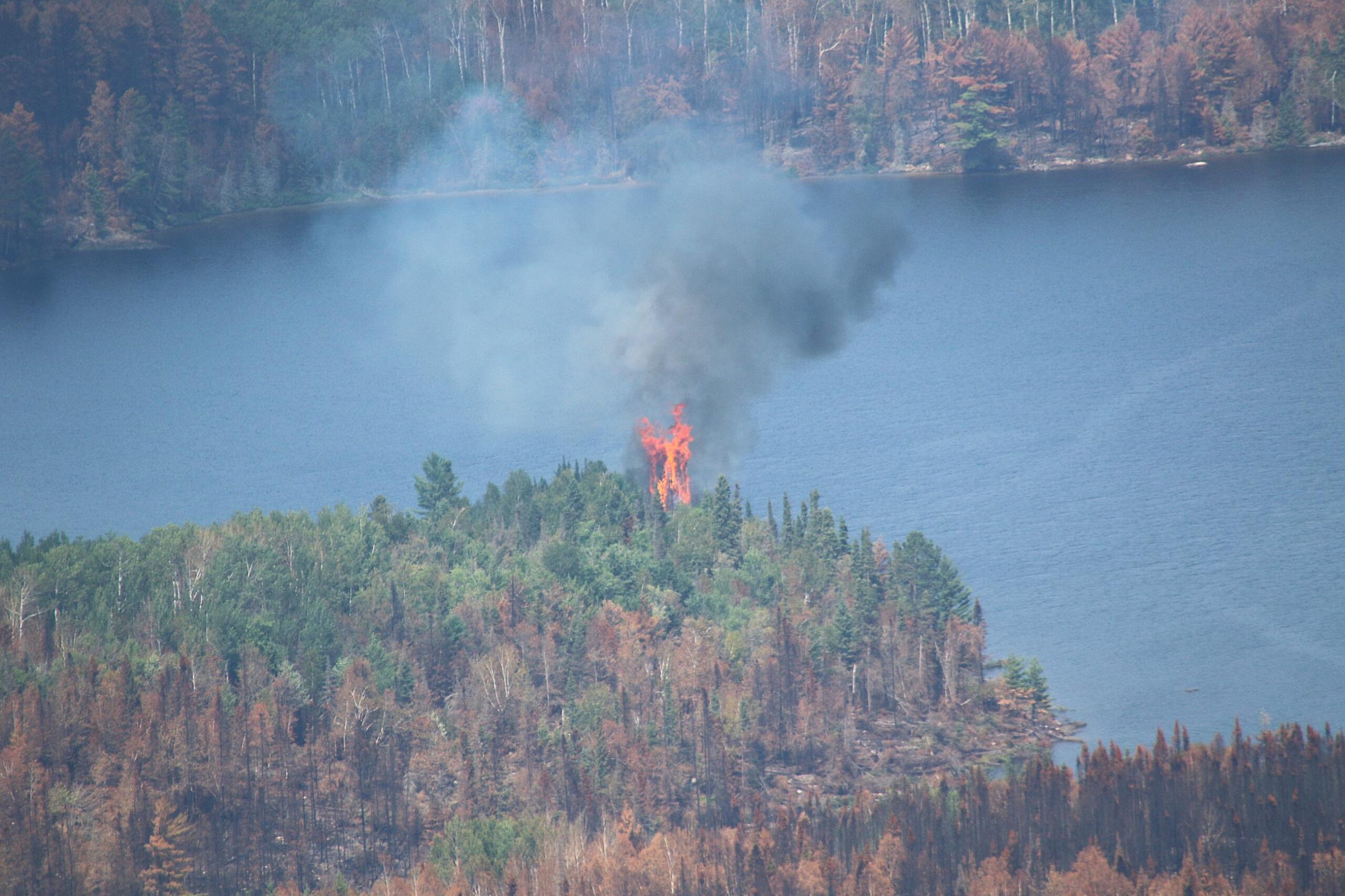
“About every 30 or 40 years, there are fires that are as equally large as the ones we had this year, and that’s going back to the year 1600. So, from that perspective, these fires aren’t very unusual,” Lee Frelich, Director of the University of Minnesota Center for Forest Ecology, told WTIP. “Although what is unusual is that they occurred at midsummer, whereas historically there was a spring fire season and then a very late summer into early fall fire season.”
The spring fire season begins shortly after snowmelt, when coniferous trees can be dry and cold and their roots do not efficiently absorb water from recently thawed soil. The region’s late-summer and fall fire season can begin in August and continue into October as forest floors dry.
A flash drought in July created similar conditions in midsummer. Frelich said summer fires may become more common.
“I think it’s slowly increasing,” Frelich said. “If you look at the Canadian data, you can get a better signal because it’s such a big area and there’s just a lot more statistics to deal with. And yeah, it seems like the fire season in Canada is getting to be like the whole summer from May clear through to into fall.”
Frelich was a guest author for the inaugural article of Boreal Compass, a Substack newsletter by Sam Reed, climate and conservation manager for Friends of the Boundary Waters. The article described the fires in Minnesota this July as the tip of a 300-mile “wall of fire.”
“It’s weird to have everything on fire all at once. And as soon as you start to take a few steps back and you just see the extent of fire all at once in Canada, it really starts to open your eyes as to both how dry much of the conditions are, but also like how this is a big, you know, it’s kind of a bigger problem than I think we’re ready for in a lot of ways,” Reed said.
Reed said the effects extended far beyond the areas that burned, with wildfire smoke degrading air quality from Grand Marais to the Atlantic Ocean.
Frelich said some forest types are less conducive to high-intensity fires and that prescribed burning can help communities prepare for wildfire.
“If you do repeated prescribed burns in those areas, like the indigenous people did for thousands of years in old red pine stands, you prevent the buildup of brush like hazel as well as balsam fir in the understory,” Frelich said. “The other is aspen. I mean, aspen is pretty wet. The foliage is pretty wet compared to conifers, and it’s just not a very flammable forest type.”
Red pine is another species that could help reduce fire intensity, although trees planted now would take decades to mature. Reed said mature red pine stands could also produce less smoke during wildfires.
“A beautiful old red pine stand. You ain’t gonna be getting a ton of smoke from that,” Reed said.
Reed also raised questions about how to keep the large number of visitors to the Boundary Waters Canoe Area Wilderness safe as the potential for summer fires increases. The Boundary Waters is the most visited wilderness area in the United States.
“If we’re going to see more summer fires in the Boundary Waters, that is the peak of visitation in tourism time. I personally think that we’re going to need to start addressing how we’re actually handling all of the visitors to the Boundary Waters and an increase, potential increase, in summer fires,” Reed said. “It’s a big question, and we need to keep people safe, or at least safer when they’re out there.”
Reed’s latest Boreal Compass article focuses on climate adaptation. Managing forests surrounding communities could be part of that effort.
“Outside the Boundary Waters, especially in the areas around cabins and settlements, that’s where you would practice the forest management that would reduce fire intensity in those areas, and then combined with Firewise in the immediate vicinity of buildings, I think you could accomplish a lot,” Frelich said.
WTIP spoke with Frelich and Reed about the July lightning fires, Boreal Compass and how visitors to the wilderness can help researchers better understand wildfires. Audio of the conversation can be found below.
Josh Hinke September 10, 2026