Minnesota agencies outline next steps after Walz mining order
Gov. Tim Walz’s executive order signed Tuesday immediately blocks Minnesota agencies from advancing permitting and environmental review for nonferrous mining in the Rainy River Headwaters watershed, while the administration begins work toward a permanent prohibition that would require action by the Minnesota Legislature.
Under the order, the Minnesota Department of Natural Resources and Minnesota Pollution Control Agency will halt work on new nonferrous mining proposals in the watershed while litigation over Minnesota’s mine siting rules is ongoing.
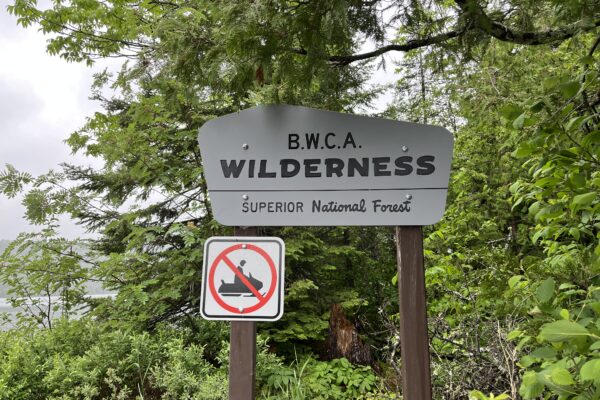
The Boundary Waters Canoe Area Wilderness lies downstream from portions of the Rainy River Headwaters. A proposed Twin Metals copper-nickel mine, located within the watershed but outside of the BWCAW, has been at the center of a long-running debate over copper-nickel mining.
State leaders say the federal government could still pursue an environmental review of a proposed mine, but the mining project would still have to meet Minnesota’s state permitting requirements.
Minnesota Pollution Control Agency Commissioner Katrina Kessler said Tuesday that Minnesota law requires mining operations to obtain state permits, regardless of whether the mine is located on state or federal land.
“Any project that wanted to construct in Minnesota would need Clean Air Act permits, and Clean Water Act permits, and the Minnesota Pollution Control Agency is the entity that issues those permits in Minnesota,” Kessler said.
Kessler said, “And the executive order says we’re not going to do that.”
DNR Commissioner Sarah Strommen said on Tuesday that, per the executive order, the agency will also decline to participate as a cooperating agency in any federal environmental review of a proposed mining project in the watershed.
“This does not mean that the DNR would not comment on proposed federal environmental review,” Strommen said. “Just that we would not formally partner with the federal government on any EIS development.”
Strommen said that while the federal government could initiate its own environmental review of a project proposed by Twin Metals or another company, the “federal government cannot unilaterally authorize a mine to begin construction.”
The executive order also directs the DNR to review all existing state nonferrous mineral leases in the watershed. Strommen said there are 38 such leases.
One of those leases is held by Twin Metals, although Strommen noted that it is not located in the area where the company has previously proposed its mine.
Strommen said some Minnesotans have called on the DNR to terminate the lease because of alleged failures to meet production requirements.
“We have not made any decisions yet about that lease, but we are in the process of reviewing,” Strommen said.
The order also directs the DNR to draft legislation that would permanently prohibit nonferrous mineral mining in the Rainy River Headwaters watershed.
Strommen emphasized that a permanent ban cannot be established through the governor’s executive order alone.
“Such a prohibition can only be enacted by the Minnesota Legislature,” Strommen said.
The executive order will remain in effect for 90 days after Walz leaves office, meaning the decision to extend the protections would fall to either DFL nominee Amy Klobuchar or Republican nominee Lisa Demuth, who will compete to replace Walz in the November general election.
Walz characterized the executive order action as a more permanent decision during Tuesday’s press conference.
“As far as my administration is concerned, the fight for the future of the Boundary Waters is over,” Walz said. “The verdict is in. The decision’s been made. We will protect this place.”
The executive order comes after Congress overturned a federal restriction on mining in the Rainy River watershed, potentially reopening the door for renewed mineral development proposals.
Kalli Hawkins August 18, 2026