County and city leaders weigh legislative priorities ahead of 2027 session
Less than two months remain until Minnesota’s 2027 Legislative Session begins, and as it approaches, county and city leaders have begun meeting to identify priorities and issues for state lawmakers to address.
This week, during the Nov. 17 Committee of the Whole work session, county officials and the Cook County Commissioners discussed several top priorities for the county, including wildfire response, the Grand Marais wastewater treatment facility, bonding for the Cook County Courthouse capital improvements, childcare, and road improvements to the last 10 miles of the Gunflint Trail.
Several of these priorities have long been priorities for county and city leaders, who have secured partial state and federal funding through lobbying efforts, the 2026 legislative session, or other avenues. With many needs still on the table, county officials discussed whether to focus their efforts on a smaller number of specific priorities rather than pursuing funding for every item.
Before fully determining which issues to prioritize for advocacy at the state level, Commissioner Dave Mills said he recommended that the county develop a strategy for setting priorities, weighing both an issue’s local impact and its potential costs.
Several commissioners and county officials talked about being strategic with their asks, determining which lawmakers to speak to, and what worked well during the previous legislative session.
County Administrator Kristen Trebil-Halbersma said once the county has established the top legislative priorities, it can lean on the lobbyist it hired to connect with the right state lawmakers during visits to the capital.
Last 10 miles of the Gunflint Trail
Commissioner Ann Sullivan said one of her priorities, in light of this summer’s wildfire season and the Little Knife Fire near the end of the Gunflint Trail, is addressing needed improvements to the road’s final 10 miles. She said she heard from several state and federal agency personnel who responded to the fire this summer that raised concerns about the road’s condition and the need for improvements.
“So I would put that as a very high priority,” Sullivan said.
The 10-mile section of road is part of the Gunflint Trail Scenic Byway and serves as an access point to the Boundary Waters Canoe Area Wilderness. The Gunflint Trail section is also integral for emergency access for first responders, firefighters, and law enforcement. The county has identified that the entire 10-mile section needs resurfacing, 16 culverts replaced, and four bridges replaced. The estimated total project cost is $16 million. As of May 2026, the county had already secured $5.5 million toward the project.
Grand Marais Wastewater Treatment Facility
In recent years, the City of Grand Marais has focused on securing state bonding assistance for the wastewater treatment facility to address deteriorating infrastructure, antiquated technology, odor control, and other issues. The total projected cost of the project is $10 million. The city has secured some funding for the project but is still working to close the gap.
City Administrator Mike Roth and Grand Marais Mayor Tracy Benson attended the Nov. 17 meeting to discuss a concerted effort with the county to advocate for funding for the wastewater treatment facility this legislative session, given that the facility serves the entire county, not just city residents.
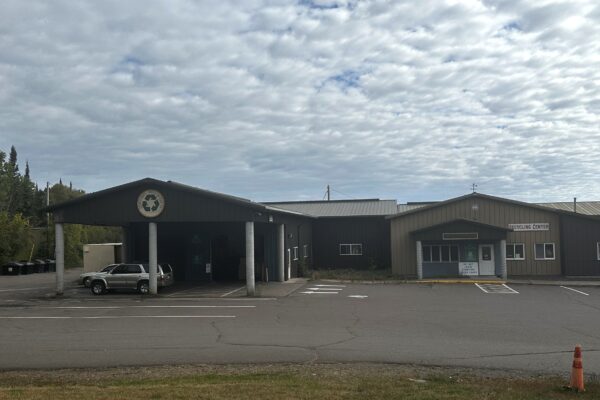
“So the issue in our mind is really very similar to what you did with the Transfer Station,” Roth said. “That this is an entire community that needs a service that’s complicated by the number of visitors we get versus the number of people we have paying the bills. And that it takes a community effort to come up with a solution.”
Roth said, “We like the fact that our facility is able to serve the entire county, and we definitely need your help to ensure that we can continue to do that.”
Sullivan said that if the county decided to include the wastewater treatment facility in its legislative priorities this year and in the years to come, it would help to have a more in-depth understanding of the project, cost, timeline, and overall plan before speaking with lawmakers.
Roth said the city will put that information into a briefing and schedule a meeting with county officials before the session.
Cook County Courthouse
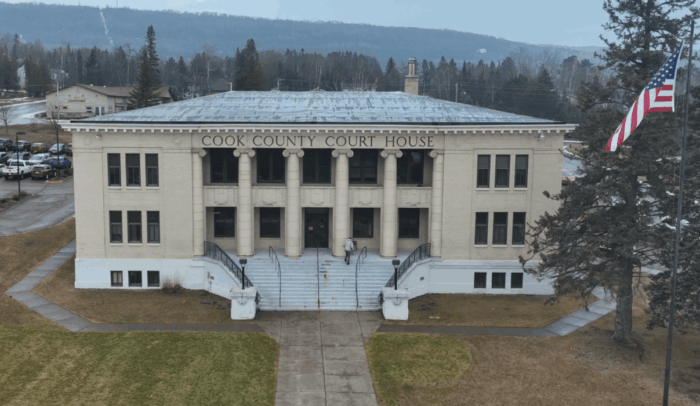
For the past several years, the county has worked to address deferred maintenance and space and security needs in the Cook County Courthouse. The county hired architectural firm BKV to compile a feasibility study for capital improvements to the building. This summer, the firm hosted workshops with county department heads and worked to conduct a full 3D scan of the courthouse. The firm will present the feasibility study and estimated project costs to the commissioners once it completes its analysis.
Wildfire Response
Earlier this summer, a July 6 lightning event sparked more than a dozen wildfires across northern Minnesota, prompting a coordinated response from state and federal agencies. On July 20, Cook County declared a state of local emergency due to the wildfires, including the Little Knife Fire. The declaration allows county officials to request state public emergency and disaster assistance for eligible wildfire response and recovery activities. Gov. Tim Walz has taken measures to provide recovery support, such as through the Disaster Assistance Contingency Account (DACA), which offers assistance to local governments when disaster costs exceed local resources.
After discussing legislative priorities, Trebil-Halbersma said she has a meeting with the county’s lobbyist on Thursday and plans to bring forward the county’s four main priorities: wildfire response, the wastewater treatment facility, bonding for the Cook County Courthouse, and the Gunflint Trail project. Then, she’ll bring more information back to the county to continue discussions over the next month.
As county and city officials continue to fine-tune legislative priorities ahead of the legislative session, they will also have a chance to meet with elected officials and legislative leaders at a legislative luncheon in Grand Marais on Dec. 3. The luncheon, hosted by the Cook County Chamber of Commerce, will provide city, county, business owners, and community members to listen to and discuss current and future legislative priorities impacting the Cook County economy.
Minnesota lawmakers will return to the State Capitol on Tuesday, Jan.12, to begin the 2027 legislative session.
This year, 55 new state legislators will take office, which includes 51 newly elected members and four members of the House who will join the Senate, according to the League of Minnesota Cities.
Kalli Hawkins November 19, 2026